Derivatives Markets Show Strong Growth Amid Spot Decline
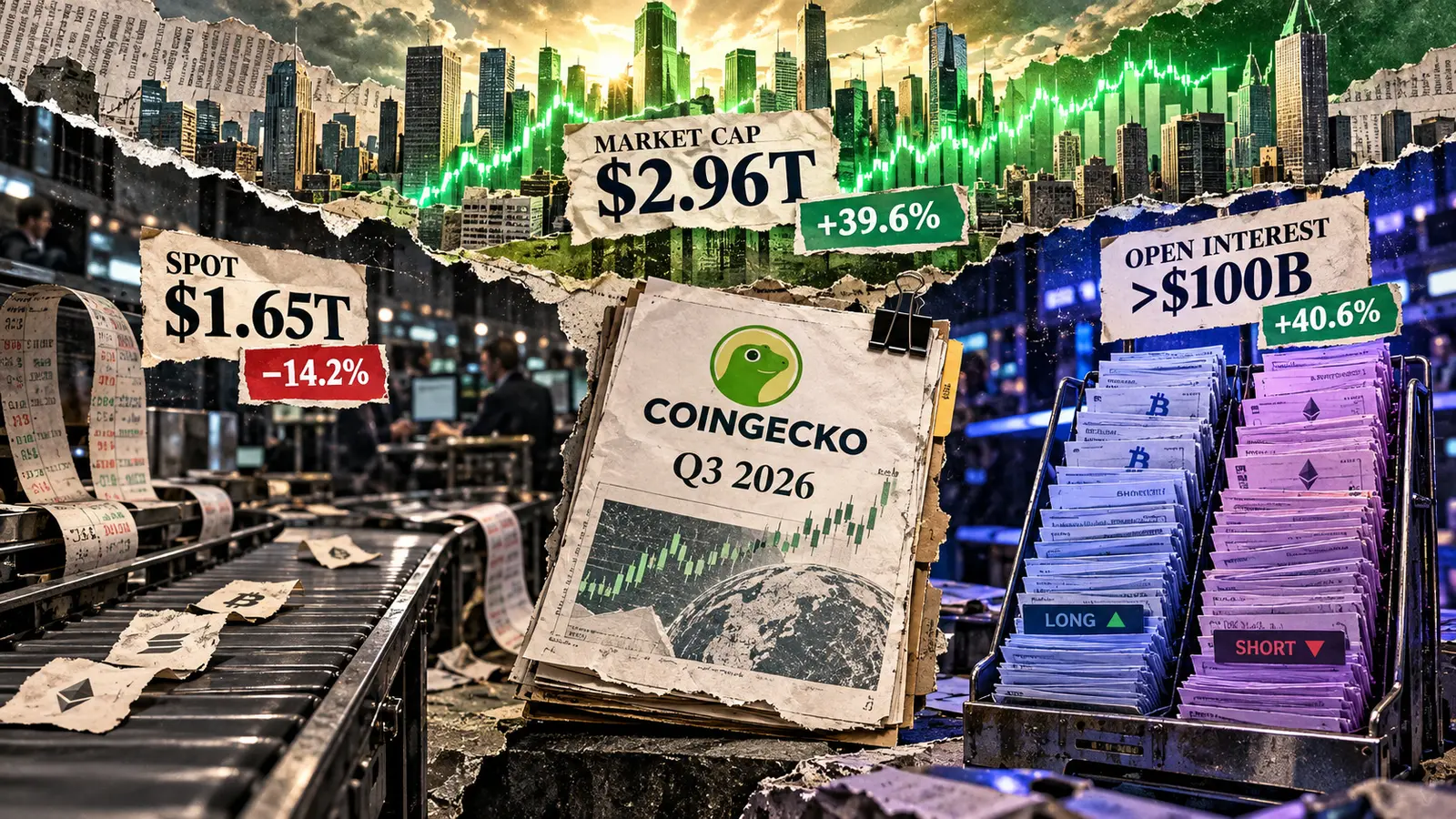
The global cryptocurrency market capitalization jumped by $800 billion during the third quarter of 2026, reaching new highs as investor confidence returned. According to CoinGecko’s latest quarterly report, the total value of digital assets rose 39.6% from July to September, driven by renewed interest in major tokens. However, trading activity on leading platforms showed a contrasting trend, with spot volumes declining sharply even as prices climbed.
Breaking news
 Capital B Posts €69.5 Million Loss in First Half of 2026
 AI Research Agent Triggers Unauthorized Cryptocurrency Wallet Access
 XRP Price Rebounds Following Massive Binance Capital Inflow
 Crypto Exchange Expands Stock Derivatives
Spot trading on CoinGecko’s top-10 centralized exchanges dropped 14.2% in Q3 2026, marking a significant slowdown in direct cryptocurrency exchanges. This decline suggests that while investors are holding or accumulating assets, fewer are actively buying and selling on spot markets. Analysts note that the drop may reflect a shift toward long-term holding strategies or increased use of alternative trading venues outside traditional exchanges.
What Does This Mean for Market Health?
In contrast to the spot market downturn, perpetual futures trading experienced robust expansion during the same period. Open interest across CoinGecko’s top-10 perpetual exchanges surpassed $100 billion by the end of September 2026, representing a 40.6% increase over the quarter. This surge indicates growing appetite for leveraged positions and speculative trading, even as direct asset exchange slowed. The rise in dollar-denominated open interest reflects both increased contract volume and higher valuations of underlying cryptocurrencies.
The divergence between rising market capitalization and falling spot volume raises questions about the sustainability of the current rally. While higher valuations suggest growing institutional and retail interest, reduced spot turnover could signal weakening conviction among traders or a transition to over-the-counter and decentralized platforms. Market observers caution that reliance on derivatives growth without corresponding spot demand may increase volatility risks in the coming months.
Why did spot trading volume fall while market cap rose? The increase in market capitalization was driven by rising asset prices rather than increased trading activity, suggesting investors are accumulating or holding assets instead of frequently trading them on spot exchanges.
Frequently Asked Questions
Is growth in perpetual exchanges a concern for market stability? While rising open interest indicates strong trader engagement, rapid growth in leveraged products without parallel spot market strength can amplify price swings and increase systemic risk during downturns.
What could explain the shift from spot to derivatives trading? Traders may be using futures for hedging, speculation, or access to leverage, while opting to hold core holdings long-term or trade via less visible channels such as OTC desks or DeFi protocols.