Geopolitical Pressures Ignite Energy Markets
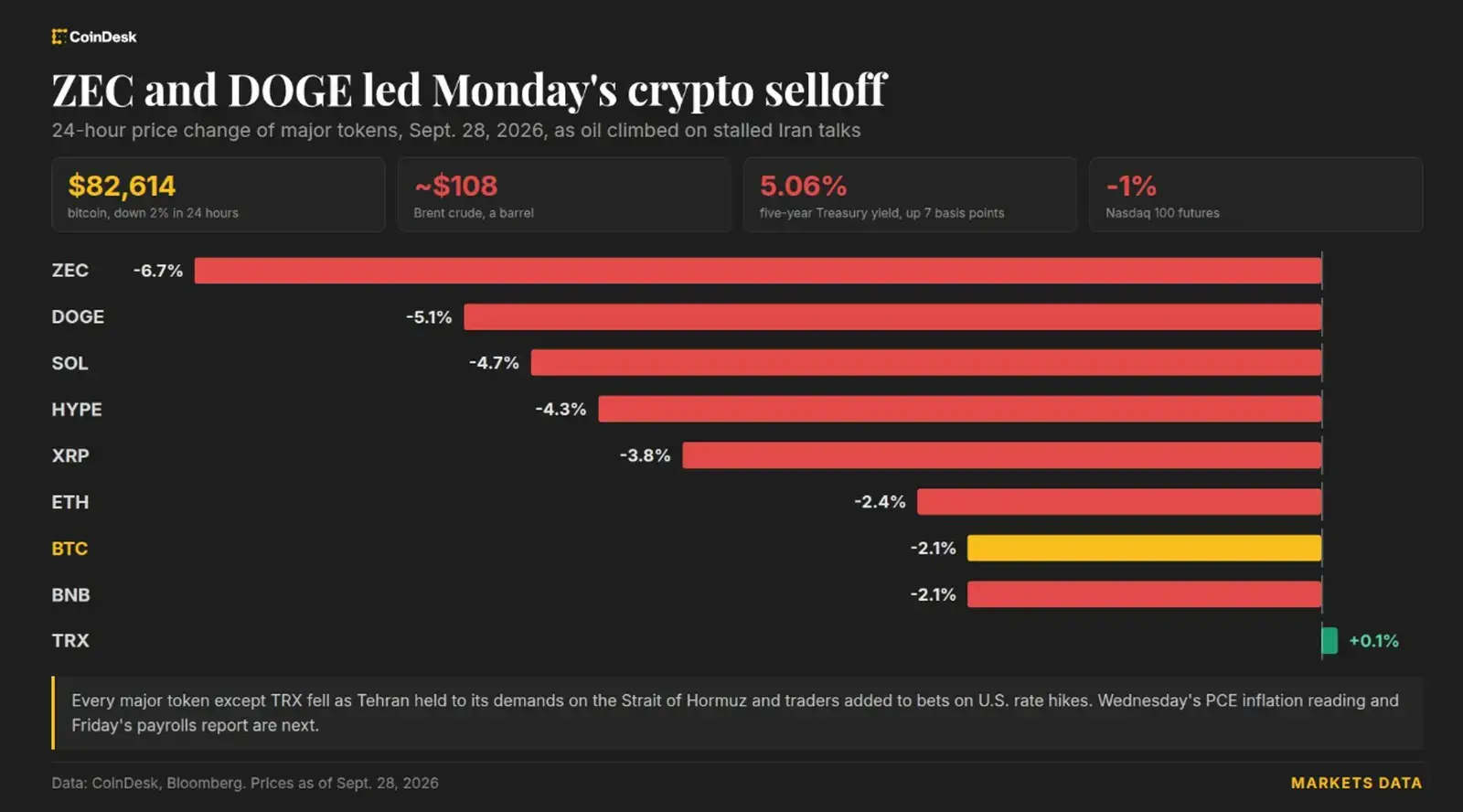
Bitcoin dropped sharply beneath the $83,000 threshold on Tuesday morning as geopolitical tensions intensified in the Middle East. Global financial markets reacted negatively to stalled diplomatic discussions involving Iran and a sudden spike in crude oil prices. Brent crude climbed aggressively toward $108 per barrel, triggering widespread risk aversion across digital asset exchanges.
Breaking news
 Crypto News Site Faces Sale After Google Penalty
 Justin Drake urges crypto ‘bunker mode,’ as AI could break wallet security within months
 XRP Whale Withdrawals from Binance Hit Seven-Month Peak
 What is a euro-pegged stablecoin?
The macroeconomic pressure rippled through the entire cryptocurrency ecosystem during early trading hours. Major altcoins experienced severe downward pressure, with Zcash leading the heaviest losses among prominent digital tokens. Market participants rapidly adjusted their financial strategies, increasing speculative wagers on imminent interest rate adjustments by federal monetary authorities.
The sudden escalation in oil prices acted as a primary catalyst for the broader financial downturn. Energy costs surged as diplomatic channels between international negotiators and Tehran failed to produce a viable breakthrough. Traders immediately incorporated potential supply disruptions into their pricing models, driving Brent crude toward the $108 milestone.
Will Macroeconomic Headwinds Derail Digital Assets?
This commodity shock amplified existing inflationary fears across global economies. Traditional investors and crypto holders alike began pulling capital out of volatile risk-on assets. Consequently, digital currency valuations suffered immediate downward adjustments as liquidity dried up in major order books.
Market analysts are closely monitoring central bank signals as traders aggressively ramp up bets on another forthcoming interest rate hike. Stubbornly high energy prices threaten to reignite inflation, potentially forcing policymakers to maintain restrictive monetary stances for longer periods.
The combination of stubborn inflation, surging oil, and ongoing geopolitical instability creates a hostile environment for speculative assets. Digital currencies remain particularly vulnerable to these external shocks as macroeconomic uncertainty clouds the near-term financial outlook.
Frequently Asked Questions
What caused the sharp decline in Bitcoin prices? Bitcoin fell below $83,000 due to stalled diplomatic talks with Iran, rising oil prices, and increased market bets on further interest rate hikes.
Which digital token suffered the most severe losses? Zcash led the downward movement among major cryptocurrencies during the morning sell-off.
How are energy markets affecting the broader economy? Brent crude surged toward $108 per barrel, heightening inflation concerns and prompting investors to withdraw from volatile risk assets.