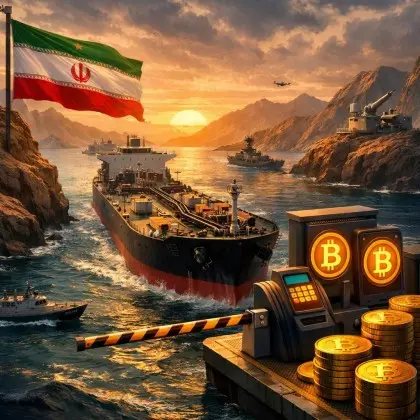
Iran has announced a new policy requiring oil tankers to pay tolls in cryptocurrency for passage through the Strait of Hormuz. This significant shift in payment requirements comes as global markets reacted to a ceasefire announcement on Tuesday evening. The move appears to be an assertion of control over this critical global shipping lane.
The Iranian government's decision targets oil tankers specifically. These vessels will now be expected to settle their transit fees using Bitcoin. The Strait of Hormuz is a vital chokepoint for global oil supplies. Approximately one-fifth of the world's total oil consumption passes through this narrow waterway daily.
Implications for Global Trade and Crypto
This new directive could have far-reaching consequences for international trade and the cryptocurrency market. By demanding payment in Bitcoin, Iran is effectively integrating digital assets into a major geopolitical and economic transaction. This could potentially increase the adoption and utility of Bitcoin in real-world commerce.
The Strait of Hormuz connects the Persian Gulf to the Gulf of Oman. It is a strategically crucial location for energy exports from Middle Eastern producers. Any disruption or new fee structure in this area can significantly impact global oil prices and supply chains. The requirement for Bitcoin payment adds a layer of complexity.
Navigating the New Payment Landscape
Oil companies and shipping firms operating in the region will need to adapt quickly to this new payment mandate. They will have to establish mechanisms for acquiring and transferring Bitcoin. This also raises questions about regulatory compliance and the volatility of cryptocurrency markets.
The decision follows a period of market reaction to a ceasefire announcement. While the specific details of the ceasefire were not elaborated upon, Iran's announcement regarding the Strait of Hormuz tolls appears to be a separate, but timely, development. It signals a proactive stance by Iran in managing its maritime trade routes.