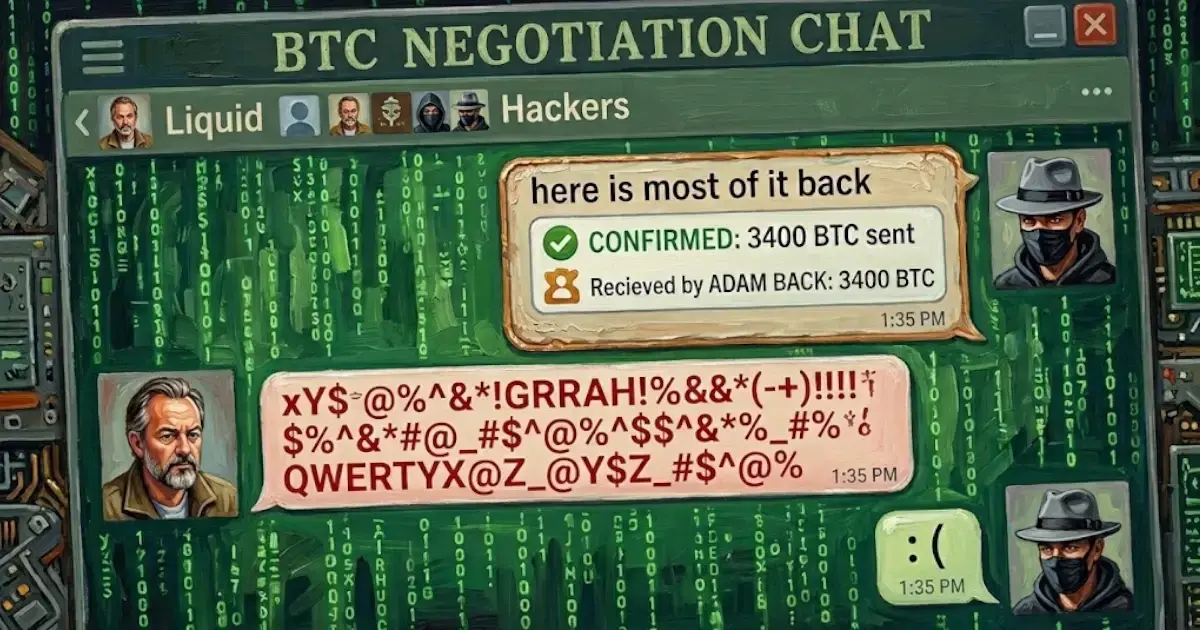
How the On-Chain Dialogue Unfolded
On September 7, 2026, the Liquid Network federation successfully retrieved 3,400 bitcoin from a wallet that had been accessed by a self-identified white hat group. The funds were moved following on-chain discussions between the parties. The white hats retained 598.5 bitcoin as a disclosed bounty for revealing the vulnerability. The incident began when nearly 4,000 bitcoin were withdrawn from the federation’s multisig wallet without authorization. The recovery was achieved through direct communication recorded on the blockchain, avoiding legal escalation. Both sides agreed to the terms publicly via transaction metadata. The event highlighted ongoing security challenges in federated sidechain models. It also demonstrated the potential for cooperative resolution in crypto incidents. The Liquid Network continues to operate normally with enhanced monitoring in place.
Breaking news
 Crypto News Site Faces Sale After Google Penalty
 Justin Drake urges crypto ‘bunker mode,’ as AI could break wallet security within months
 XRP Whale Withdrawals from Binance Hit Seven-Month Peak
 What is a euro-pegged stablecoin?
The white hat group initiated contact by leaving a message in the transaction that moved the funds. They explained their actions were intended to test the network’s resilience. Federation validators responded through subsequent transactions, confirming willingness to negotiate. Over several hours, the parties exchanged details about the vulnerability and proposed settlement terms. The final agreement included the return of the bulk of the funds and a bounty payment. All interactions were visible on the Liquid blockchain, ensuring transparency. No off-chain communication was used. The process relied entirely on cryptographic signatures and timelocked transactions. This method allowed verifiable accountability without revealing identities. The federation confirmed the recovered funds were returned to cold storage. The white hats have not moved their retained BTC since the settlement.
What This Means for Sidechain Security Going Forward
The incident raises questions about the balance between openness and protection in federated systems. While the outcome was peaceful, it underscores the risk posed by trusted validator models. Critics argue that such recoveries depend on the goodwill of attackers. Supporters point to the success of incentive-based disclosure. The Liquid team has announced plans to improve threshold signatures and anomaly detection. They also intend to formalize bug bounty programs with clearer payout structures. The event may influence how other sidechains handle similar breaches. Regulators are watching closely for precedents in crypto dispute resolution. The federation insists user funds were never at risk during the episode. Long-term trust will depend on consistent transparency and technical upgrades.
Who were the white hats involved in the Liquid Network incident? The identities of the white hat group remain unknown, as they communicated solely through blockchain transactions and did not reveal personal information.
Frequently Asked Questions
Why did the federation agree to pay a bounty instead of pursuing legal action? The federation chose negotiation to recover funds quickly and avoid public conflict, prioritizing the return of assets over punitive measures.
Will the retained 598.5 BTC be returned or used for network development? The white hats have not indicated any plans to move or return the BTC, and the federation has not made claims on the retained amount.