Is Fee Revenue Sufficient for Security?
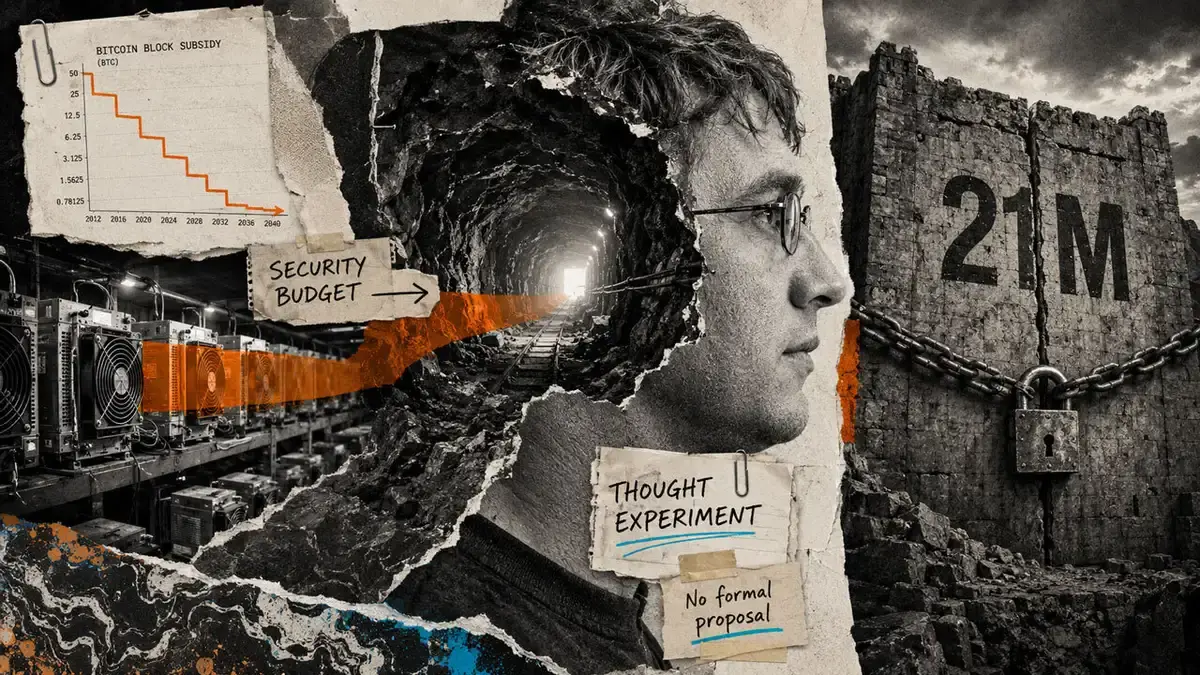
Peter Todd, an early developer in the Bitcoin community, has reignited discussions surrounding Bitcoin's capped supply of 21 million coins. This debate centers on whether the current system of transaction fees can sustain the network's security as block rewards diminish. Todd's comments gained traction after a clip surfaced online in August.
Breaking news
 Crypto News Site Faces Sale After Google Penalty
 Justin Drake urges crypto ‘bunker mode,’ as AI could break wallet security within months
 XRP Whale Withdrawals from Binance Hit Seven-Month Peak
 What is a euro-pegged stablecoin?
The essence of the argument lies in the sustainability of Bitcoin's security model. Currently, miners receive rewards from both block subsidies and transaction fees. However, as block rewards decrease with each halving event, the reliance on transaction fees grows. Todd suggests that Bitcoin might need a „tail emission,”a small, ongoing reward for miners, to ensure security remains robust. This proposal raises questions about the integrity of Bitcoin's fixed supply and whether altering it could undermine the currency's value.
Recent data indicates that transaction fees currently account for only about 0.5% of miners' overall revenue. This statistic raises concerns about the future viability of the network's security if block rewards continue to decline. Critics of Todd's tail emission idea argue that it could lead to inflation, diluting Bitcoin's value and contradicting its original purpose as a deflationary asset.
Can Bitcoin Adapt to Changing Economic Realities?
Todd's perspective is not without support. Some advocates believe that a small, predictable emission could stabilize the network and provide necessary funds for miners. They argue that ensuring security is paramount, as a compromised network could lead to significant losses for users. However, the debate remains contentious, with strong opinions on both sides.
As Bitcoin matures, it faces new challenges that require innovative solutions. The ongoing discussions about transaction fees and potential tail emissions reflect a broader concern about the cryptocurrency's long-term sustainability. If transaction fees do not rise sufficiently to replace dwindling block rewards, the network's security could be jeopardized.
Frequently Asked Questions
The outcome of this debate could have lasting implications for Bitcoin's future. A consensus on how to balance security funding with maintaining a capped supply is crucial. Without a clear path forward, Bitcoin's reputation as a secure and reliable store of value may be at risk.
Why is the 21 million cap on Bitcoin important? The 21 million cap is fundamental to Bitcoin's value proposition as a deflationary asset. It ensures scarcity, which many believe is essential for maintaining its status as „digital gold.”What are the potential consequences of introducing tail emissions? Introducing tail emissions could provide miners with ongoing revenue but may also lead to inflation. This could undermine Bitcoin's fixed supply principle and affect its perceived value.
How do transaction fees currently impact miner revenue? Currently, transaction fees contribute only a small fraction (about 0.5%) to miner revenue. As block rewards decrease, the reliance on these fees for network security becomes increasingly critical.