How IBIT’s Open‑Ended Structure Fuels Unprecedented Inflows
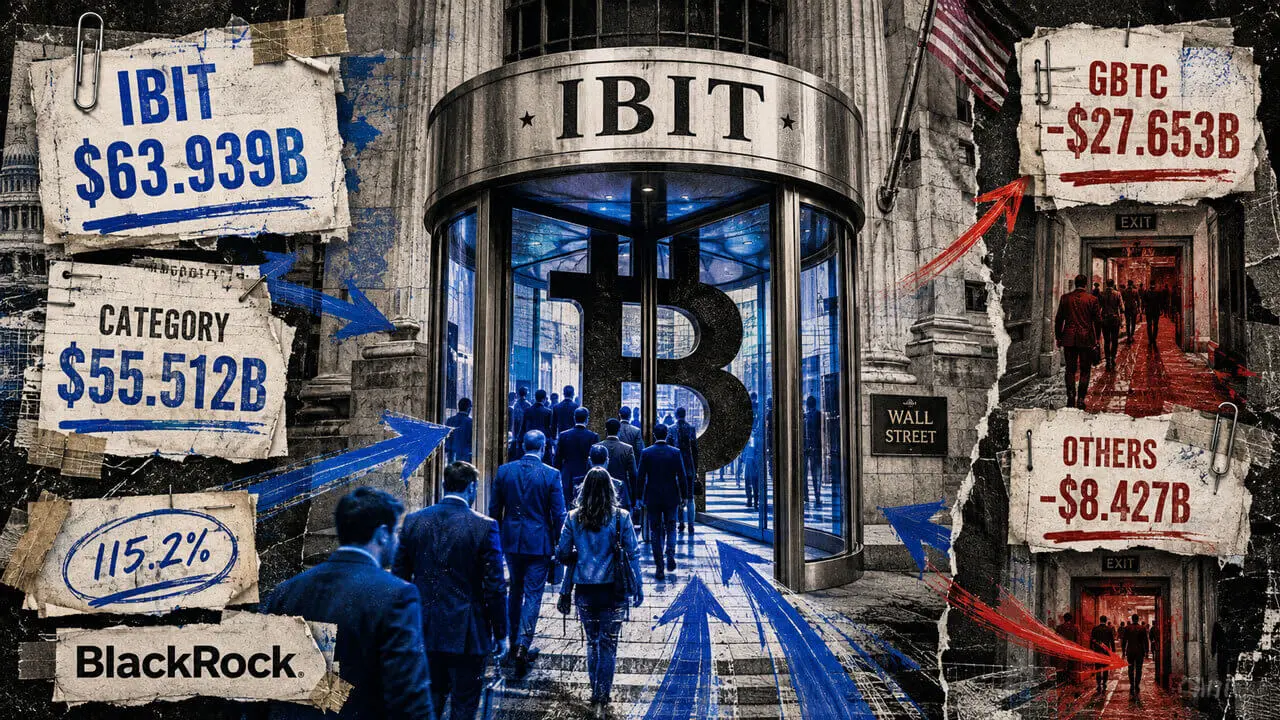
The i Shares Bitcoin Trust (IBIT) now commands the entire U. S. Bitcoin exchange‑traded fund market, holding roughly $63 billion in assets. Launched in early 2024, the fund has attracted enough fresh capital to neutralize the combined net outflows from all competing Bitcoin ETFs, making it the sector’s undisputed heavyweight.
Breaking news
 Cardano Price Analysis: Whale Activity Surges as ADA Tests Key Resistance
 Bitcoin Price Walks a Tightrope as Bears Circle the $82K Zone
 Bitcoin’s Rally Nears $85,000, Potential Sell‑off Zone for Early Buyers
 Near Protocol Trading Volume Doubles Following 11% Price Increase
IBIT’s surge stems from a mix of institutional appetite and retail curiosity. With no traditional investment committee and a structure that limits public scrutiny, the fund operates like a „revolving door” of capital, continuously pulling in new money while other products lose investors. Analysts say the absence of a visible decision‑making body allows IBIT to move swiftly, appealing to investors eager for exposure to Bitcoin without the friction of conventional fund governance.
IBIT’s design lets it issue and redeem shares on a daily basis, a feature that many rival ETFs lack. This flexibility means large investors can allocate billions in a single day, then pull out just as quickly if market conditions shift. The fund’s sponsor, BlackRock, leverages its extensive distribution network to tap both pension funds and high‑net‑worth individuals, driving a steady stream of fresh capital. Recent data shows that while other Bitcoin ETFs collectively shed $2 billion in the past quarter, IBIT added $4 billion, effectively offsetting the sector’s net outflow.
Why Are Competing Bitcoin ETFs Struggling to Keep Pace?
Industry insiders note that the fund’s lack of a public investment committee reduces bureaucratic delays. „When you remove the layers of approval, you get a more responsive vehicle,” said a senior analyst at a major brokerage. This responsiveness has made IBIT a preferred conduit for investors seeking rapid exposure to Bitcoin’s price movements, especially during periods of heightened volatility.
Competing funds, such as the Grayscale Bitcoin Trust and the Fidelity Bitcoin ETF, have faced regulatory hurdles and higher expense ratios, which have eroded investor confidence. Moreover, their more traditional governance structures require periodic disclosures and committee sign‑offs, slowing down capital flows. As a result, these funds have seen steady net withdrawals, prompting managers to cut fees in a bid to stay relevant. Yet even aggressive fee reductions have not stemmed the tide, as investors gravitate toward IBIT’s streamlined approach.
The market’s concentration around a single fund raises concerns about liquidity and systemic risk. If a sudden market shock prompts a mass redemption from IBIT, the fund’s open‑ended nature could amplify price swings in the underlying Bitcoin market. Regulators are watching closely, though no formal action has been announced.
The dominance of IBIT reshapes the landscape for Bitcoin investment in the United States. With a single fund now channeling the majority of institutional and retail capital, the sector’s competitive dynamics have effectively collapsed. Future entrants will need to innovate beyond traditional fee structures and governance models to attract investors.
Frequently Asked Questions
What makes IBIT different from other Bitcoin ETFs? IBIT operates without a public investment committee and offers daily share creation and redemption, allowing rapid capital movement and lower operational friction.
How does IBIT’s growth affect Bitcoin’s price stability? Because IBIT handles a large share of market liquidity, massive inflows or outflows could magnify Bitcoin price swings, especially during periods of market stress.
Will regulators intervene in the fund’s structure? Regulators are monitoring the concentration of assets but have not indicated any immediate regulatory changes; future action will depend on market developments and investor protection concerns.