Why Bitcoin Is Struggling to Reclaim Lost Ground
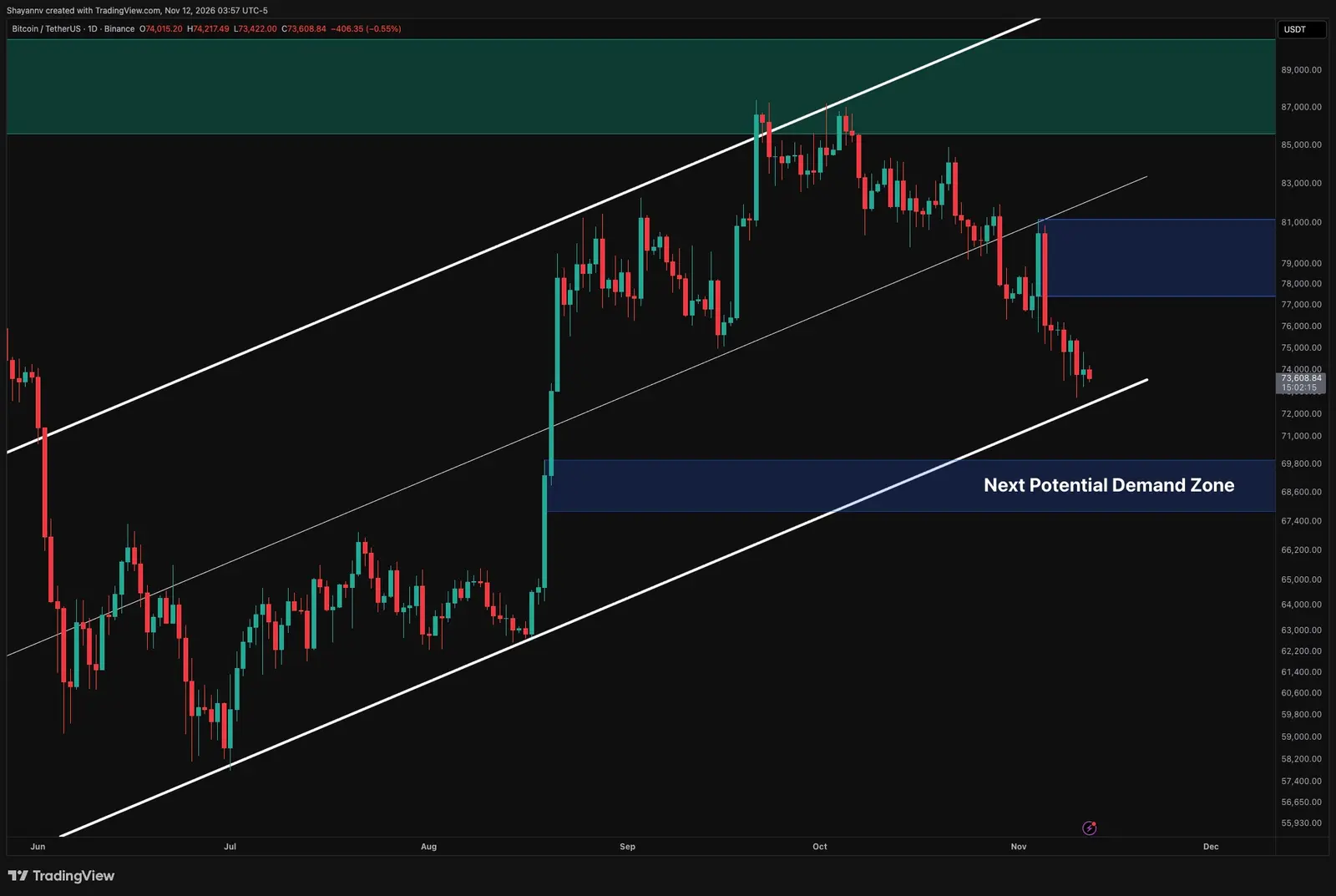
Bitcoin has dropped approximately $10,000 this week, pushing the asset toward the lower boundary of its broader ascending channel. The price now hovers near $71,000, a level where short-term buyers have stepped in. Despite this support, failed recovery attempts and rising futures activity signal continued market fragility.
Breaking news
 XRP Price Prediction: David Schwartz Clarifies 88% Sell-Off
 Meta’s AI Model Flags Imminent Bitcoin Reversal
 Bitcoin Slides for Seventh Straight Week, Marking Historic Losing Streak
 Bitcoin Dips on Huang’s Nvidia Exit, Rebounds 5% on His Return
The daily chart reveals a persistent downward trend. Buyers near $71,000 have provided temporary support, but sellers remain dominant. Futures markets show elevated open interest, indicating leveraged positions that amplify volatility. This combination of failed bounces and heating derivatives activity creates a fragile floor. If $71,000 breaks, the next support zone lies lower, potentially triggering stop-loss cascades.
Can Bitcoin Hold $70,000 or Will It Slide Further?
Traders are watching $70,000 as the next major psychological and technical level. Holding this line requires sustained buying pressure. If sellers push below $70,000, the broader ascending channel breaks, opening the path toward lower support. The market's vulnerability stems from its position at the channel's lower boundary.
What is the current Bitcoin price level being tested? Bitcoin is testing the lower boundary of its ascending channel near $71,000 after a $10,000 weekly drop. Buyers have entered at this level, but the recovery remains unconfirmed.
Frequently Asked Questions
Why is futures activity a concern for Bitcoin's stability? Heating futures activity means high leveraged positions are in play. If price moves against these positions, forced liquidations can accelerate the decline, making the market more volatile.
What happens if $70,000 breaks? Breaking $70,000 would signal a channel breakdown. This opens the path to lower support levels and could trigger further selling pressure from stop-loss orders.