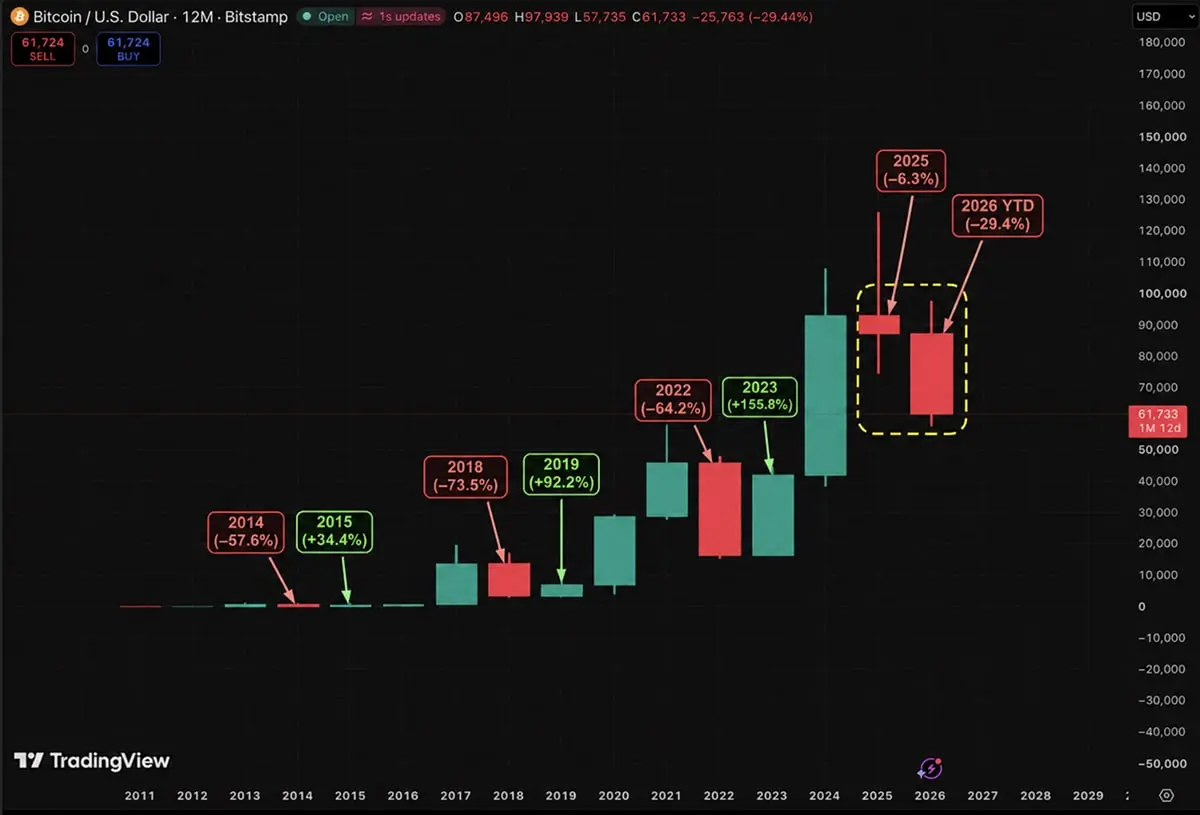
The Erosion of Historical Market Cycles
Bitcoin is currently navigating a historic downturn that threatens to shatter its long-standing market patterns. The digital asset has recorded a 30% decline throughout 2026, marking a second consecutive year of negative performance. If current selling pressure persists through December, the cryptocurrency will officially break its historical precedent of never experiencing back-to-back annual losses.
Breaking news
 Braiins Flags Widespread Attack on Bitcoin Mining Infrastructure
 Bitcoin Miners Lose Hashrate to Hijacking Attack on Unencrypted Links
 Bitcoin Reserve Bill Advances in Congress
 Fidelity Files for Spot Chainlink ETF on Nasdaq
The asset’s historical trajectory has long been defined by a predictable four-year cycle. Investors previously relied on this rhythm to anticipate recovery phases following market corrections. However, the current bearish trend suggests that traditional technical indicators may no longer hold the same predictive weight for traders and institutional analysts alike.
Market observers are closely monitoring the persistent selling momentum that has gripped the asset for two years. This extended period of decline challenges the notion that Bitcoin inevitably rebounds after a single year of losses. The lack of a clear recovery in 2026 indicates that external economic factors or shifting investor sentiment may be overriding past cyclical behaviors.
Is the Four-Year Pattern Permanently Broken?
Technical analysts point to sustained pressure as the primary driver behind the current price stagnation. As sell orders continue to outweigh buying interest, the asset struggles to find a firm support level. This environment has forced many market participants to reconsider their long-term strategies regarding digital asset volatility.
The market is now grappling with the possibility that the four-year cycle has reached its natural conclusion. If the digital currency fails to reverse its downward trajectory, the industry must prepare for a new era of unpredictable price action. This shift could fundamentally change how investors approach risk management in the cryptocurrency sector.
Frequently Asked Questions
The consequences of this trend are significant for the broader financial ecosystem. A failure to recover could dampen enthusiasm among retail investors who previously viewed the four-year cycle as a reliable roadmap. Moving forward, the market will likely remain volatile as participants wait to see if the asset can establish a new, more stable baseline.
What does a second consecutive year of losses mean for Bitcoin? It signals a departure from the asset's historical performance patterns, suggesting that previous cyclical recovery models may no longer be reliable indicators for future price movements.
Why is the four-year cycle considered significant? Historically, this cycle provided a predictable framework for investors to anticipate market recovery periods. Breaking this pattern introduces new levels of uncertainty for traders and long-term holders.