
Diverging Sentiment Across Major Assets
Cryptocurrency markets faced intense turbulence this week as Bitcoin dropped under the crucial $80,000 threshold. The sharp price decline triggered a staggering wave of long liquidations totaling $1.34 billion across major digital asset exchanges, catching heavily leveraged traders off guard and forcing sudden position closures.
Breaking news
 Claude AI Forecasts Chainlink Plunge in 2027
 XRP Crashes to $0.87 as ETF Assets Fall Below $1 Billion
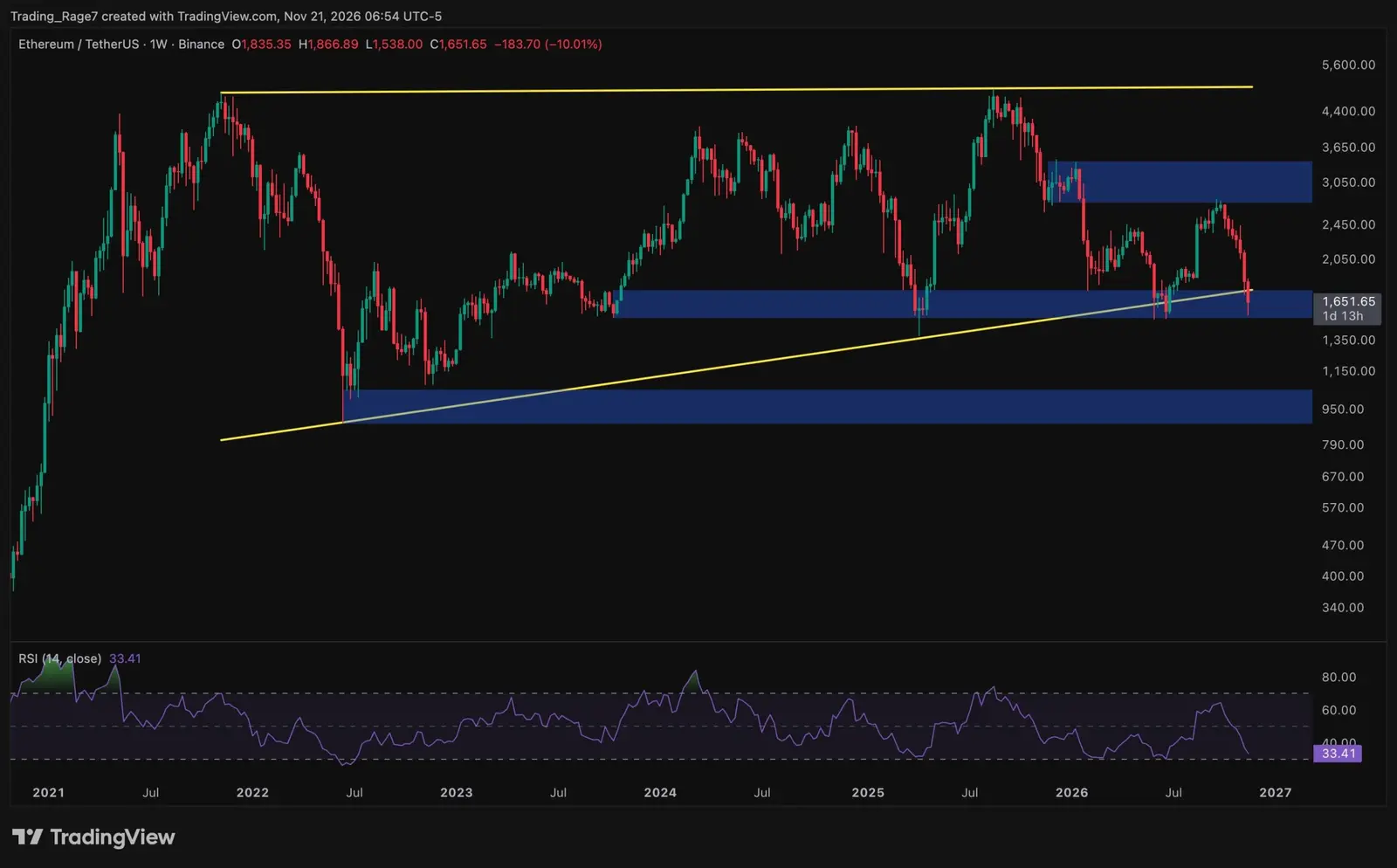 Ethereum price analysis: Did ETH hit its macro bottom after a 30% monthly drop?
 Bitcoin Reclaims $60,000 After Sharp Summer Selloff
The sudden market correction exposed deep vulnerabilities in speculative trading strategies. As prices tumbled, automated margin calls wiped out bullish bets that had accumulated during previous weeks of optimistic momentum. Traders holding long positions found themselves unable to meet collateral requirements, leading to cascading liquidations throughout the global trading ecosystem.
Market behavior showed notable divergence between the two leading cryptocurrencies during the sell-off. Ether funding rates turned negative on the OKX exchange, indicating a strong bearish sentiment among derivatives traders. Meanwhile, Bitcoin funding rates managed to remain positive despite the heavy downward pressure on spot prices.
Can the Bullish Momentum Survive This Shock?
This unusual gap highlights shifting strategies among institutional and retail participants alike. While Ether traders quickly moved to short positions or exited the market entirely, Bitcoin holders maintained a degree of optimism. The persistence of positive funding for Bitcoin suggests that some leveraged buyers still expect a rapid recovery despite the billions in forced liquidations.
The sheer scale of the recent liquidations raises serious questions about near-term price stability. Market analysts are watching order books closely to see if spot demand can absorb the lingering selling pressure. Without steady inflows of new capital, these heavy unwinding events often preface extended consolidation periods for digital assets.
Frequently Asked Questions
Trading volumes remain elevated as participants reassess their risk exposure in the wake of the drop. Much depends on whether macroeconomic conditions support a return of risk-on sentiment in the broader financial markets. For now, cautious caution has replaced the aggressive optimism that previously defined the crypto sector.
What caused the recent drop in Bitcoin prices? The drop was accelerated by a massive wave of long liquidations totaling $1.34 billion. Leveraged bullish positions were forcibly unwound as prices broke key technical levels.
How did Ether react differently from Bitcoin? Ether funding rates turned negative on the OKX exchange during the sell-off. In contrast, Bitcoin funding rates managed to stay positive despite the heavy market stress.