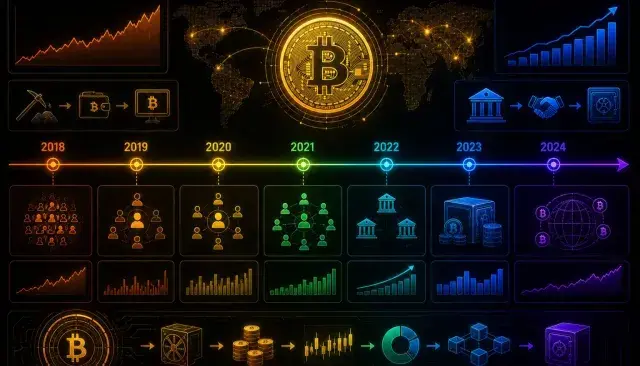
The Institutional Build-Up: A Timeline
Bitcoin recently surpassed $80,000, signaling a potential turning point. Analyst Darkfost’s research reveals a significant, quiet transformation in Bitcoin’s market structure since 2018. This analysis focuses on institutional involvement and its impact on price.
Breaking news
 Bitcoin Security Could Be Threatened by 2046, AI Model Indicates
 XRP Ledger Patches Critical Bug That Could Have Minted 18 Trillion Tokens
 Aptos Launches AI Tools to Simplify Move Programming
 Regulatory Reach: CFTC Says It Can Oversight Nearly All Commodities
The recent price surge feels different from previous cycles. Darkfost’s timeline details how institutional investors have gradually reshaped the Bitcoin landscape. Early involvement began with custody solutions, allowing secure storage of digital assets. This was crucial for larger players considering entry. Then came regulated futures markets, providing a familiar trading vehicle.
2018 marked a turning point. Fidelity Digital Assets launched, offering institutional-grade custody. This signaled serious interest from traditional finance. 2019 saw Bakkt, the Intercontinental Exchange’s digital asset platform, begin testing futures contracts. These contracts allowed institutions to gain Bitcoin exposure without directly holding the asset.
Is Retail Demand Still Driving the Market?
The real acceleration happened in 2020 and 2021. MicroStrategy’s significant Bitcoin purchases grabbed headlines. This corporate investment demonstrated a new level of confidence. PayPal and Square enabled Bitcoin buying for their users, expanding access. Grayscale Investments’ Bitcoin Trust grew rapidly, accumulating substantial holdings.
The influx of institutional money has changed the dynamics. Previously, retail investors largely drove price movements. Now, institutional demand appears to be a dominant force. This is reflected in trading patterns and order book depth. Darkfost notes a shift towards more sophisticated trading strategies. These strategies are typical of institutional players.
The impact is visible in the current rally. Unlike past cycles fueled by retail frenzy, this one feels more measured. Institutional investors tend to deploy capital more strategically. They also have longer investment horizons. This could lead to greater price stability. However, it also means the market is less susceptible to quick, impulsive swings.
Frequently Asked Questions
The growing institutional presence isn’t without potential risks. Increased regulation is inevitable. This could impact market access and liquidity. Centralization of Bitcoin holdings within a few large institutions also poses a threat. It could create systemic risk. However, the overall trend suggests a maturing market.
What was the significance of Fidelity’s entry? Fidelity’s launch of a digital asset service in 2018 was pivotal. It provided a secure and regulated custody solution. This was essential for attracting institutional investors hesitant about the risks of self-custody.
How did futures contracts change the game? Regulated futures contracts allowed institutions to participate in the Bitcoin market without directly owning the cryptocurrency. This lowered the barrier to entry and increased liquidity. It also provided a hedging mechanism for existing positions.