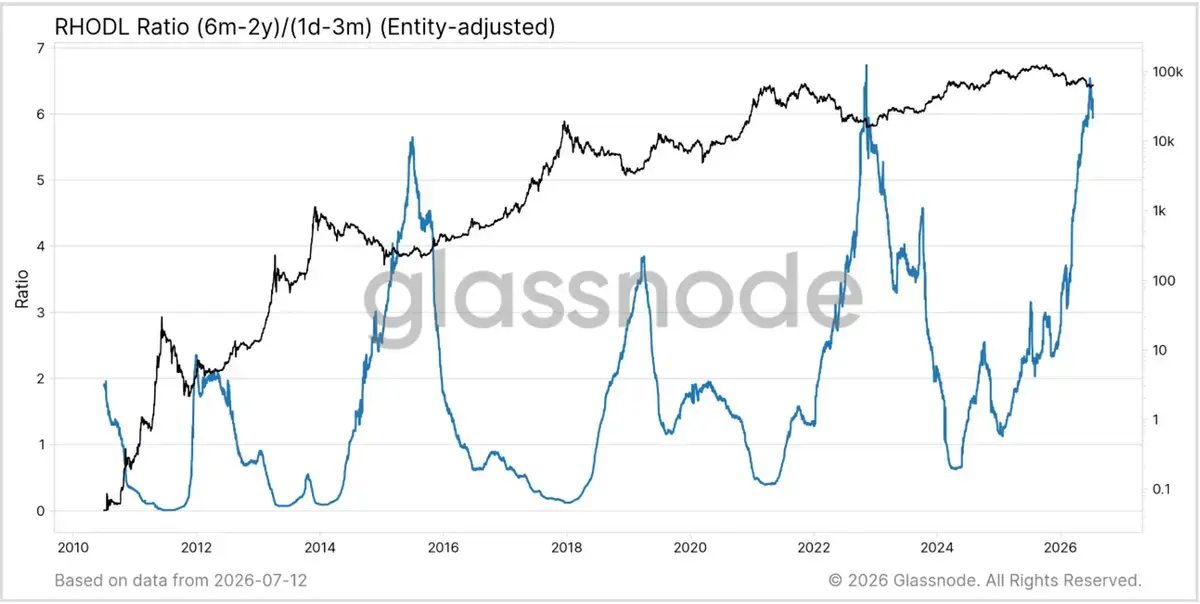
On‑chain data reveal a generational handoff
Long‑term Bitcoin owners are quietly shifting their coins to a younger cohort of investors. The movement, traced through on‑chain data, coincides with the Federal Reserve’s looming decision on interest‑rate policy, raising concerns of a broader market capitulation.
Breaking news
 Crypto Whale Moves $378 Million After Holding Through 2020 Crash
 BlackRock Ethereum ETF Sees Major Outflows as Investors Pull Back
 Hedge Funds Turn Their Attention to Crypto Markets, Says Binance Executive
 XRP Spot Trading Stalls Despite Recent Price Gains
Analysts say the transfer reflects a strategic exit by holders who have kept Bitcoin for more than a year. By moving assets to exchange wallets, they signal readiness to sell. The trend suggests confidence that newer participants will sustain demand, even as macro‑economic pressures mount.
Recent blockchain analysis shows a modest but steady rise in long‑term addresses sending Bitcoin to exchange platforms. Over the past two weeks, the volume of such transfers grew by roughly 4 percent of total circulating supply. Industry observers interpret the pattern as a „great rotation,” where seasoned investors hand over control to fresh capital. „We are seeing a quiet redistribution rather than a panic dump,” noted a senior analyst at a leading crypto research firm. The influx of supply to exchanges may provide liquidity for newcomers, potentially stabilizing price volatility in the short term.
Will the Fed’s next move force a market sell‑off?
The Federal Reserve is expected to announce rate hikes at its upcoming meeting, a decision that could tighten financial conditions worldwide. Higher rates often depress risk‑on assets, and Bitcoin is no exception. If the Fed raises rates, the cost of borrowing rises, reducing speculative appetite and possibly triggering a wave of selling among the newly‑acquired holdings. Conversely, some investors view Bitcoin as a hedge against inflation, which could attract buyers even in a higher‑rate environment. Market participants are closely watching the policy announcement for clues about future price direction.
The ongoing handover of Bitcoin supply may soften the impact of any Fed‑induced shock. By distributing assets across a broader base, the market could absorb selling pressure without a dramatic price plunge. However, if rate hikes prove aggressive, even the diversified holder pool might capitulate, leading to a rapid decline. Investors should monitor both on‑chain activity and monetary policy cues to gauge the next market phase.
Frequently Asked Questions
What does „great rotation” mean for Bitcoin’s price? It describes a shift where long‑term holders move coins to newer investors, potentially smoothing price swings by widening ownership.
How could Federal Reserve rate hikes affect Bitcoin? Higher rates increase borrowing costs, often reducing demand for speculative assets like Bitcoin, which may trigger sell‑offs if investors seek safer havens.
Is the supply transfer a sign of confidence or panic? Analysts view it as a strategic redistribution, indicating confidence that fresh buyers will sustain market demand rather than an emergency exit.