
What Drove the Renewed Interest in Bitcoin ETFs
On October 13, 2026, US spot Bitcoin exchange-traded funds recorded net inflows of $175.6 million, marking a return to positive flow after a volatile start to the month. Spot ether ETFs simultaneously attracted $24.8 million in new investments, according to data compiled by industry analysts. Fidelity's FBTC fund led the day's activity among Bitcoin products, signaling renewed institutional appetite for digital asset exposure through regulated vehicles.
Breaking news
 Coinbase urges early Bitcoin quantum security preparations, proposing flexible wallet designs and a multi-year upgrade path
 Solana Announces Alpenglow Upgrade for October 21 to Boost Finality Speed
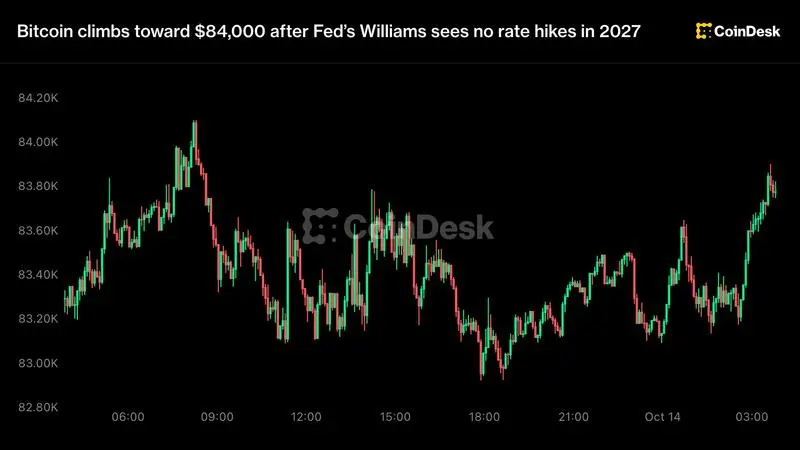 Bitcoin climbs toward $84,000 after Fed’s Williams sees no rate hikes in 2027
 Sberbank Advances Toward Crypto Trading Launch Following Central Bank Approval
The inflows suggest a shift in market sentiment following earlier outflows that raised concerns about sustained interest in crypto-linked ETFs. Analysts note that the rebound coincides with stabilizing Bitcoin prices and increased clarity around regulatory frameworks for digital assets. Ether's performance, while smaller in scale, reflects growing diversification beyond Bitcoin as investors seek exposure to multiple blockchain ecosystems through compliant investment products.
How Are Ether ETFs Performing Relative to Bitcoin
Market observers point to several factors behind the October 13 inflows, including reduced volatility in Bitcoin's price action and renewed confidence in the long-term viability of spot ETF structures. Fidelity's FBTC, which has consistently ranked among the largest Bitcoin ETFs by assets under management, saw particularly strong demand, suggesting that established financial institutions continue to play a key role in driving flows. The data indicates that institutional investors may be using dips as opportunities to increase allocations rather than exiting positions entirely.
While Bitcoin ETFs dominated the day's inflow figures, the $24.8 million attracted by spot ether funds represents a meaningful contribution to overall crypto ETF activity. This level of inflow suggests that ether, despite its smaller market capitalization compared to Bitcoin, is gaining traction as a distinct asset class in institutional portfolios. The simultaneous growth in both products hints at a broader trend where investors are building balanced exposure to major cryptocurrencies rather than focusing solely on Bitcoin.
What Does This Mean for Future ETF Flows
The return to net inflows for both Bitcoin and ether ETFs may signal a stabilization phase after months of uneven performance, potentially encouraging further product launches and innovation in the space. Sustained interest could lead to increased competition among fund providers, potentially lowering fees and improving accessibility for retail and institutional investors alike. However, market participants caution that flows remain sensitive to macroeconomic shifts and regulatory developments, meaning consistent growth is not guaranteed.
What caused the shift from outflows to inflows on October 13, 2026? The shift appears linked to stabilizing Bitcoin prices and renewed institutional confidence in spot ETF structures after a turbulent start to the month.
Frequently Asked Questions
Why did Fidelity's FBTC lead the day's Bitcoin ETF inflows? FBTC's strong performance likely reflects its established reputation, large asset base, and investor preference for trusted providers during periods of market recovery.
Are ether ETFs becoming a significant part of crypto investment strategies? Yes, the $24.8 million inflow indicates growing institutional interest in ether as a complementary asset to Bitcoin, supporting diversified crypto exposure.