Why Does Bitcoin Keep Rejecting $87K Even Amid Continued Corporate Buying?
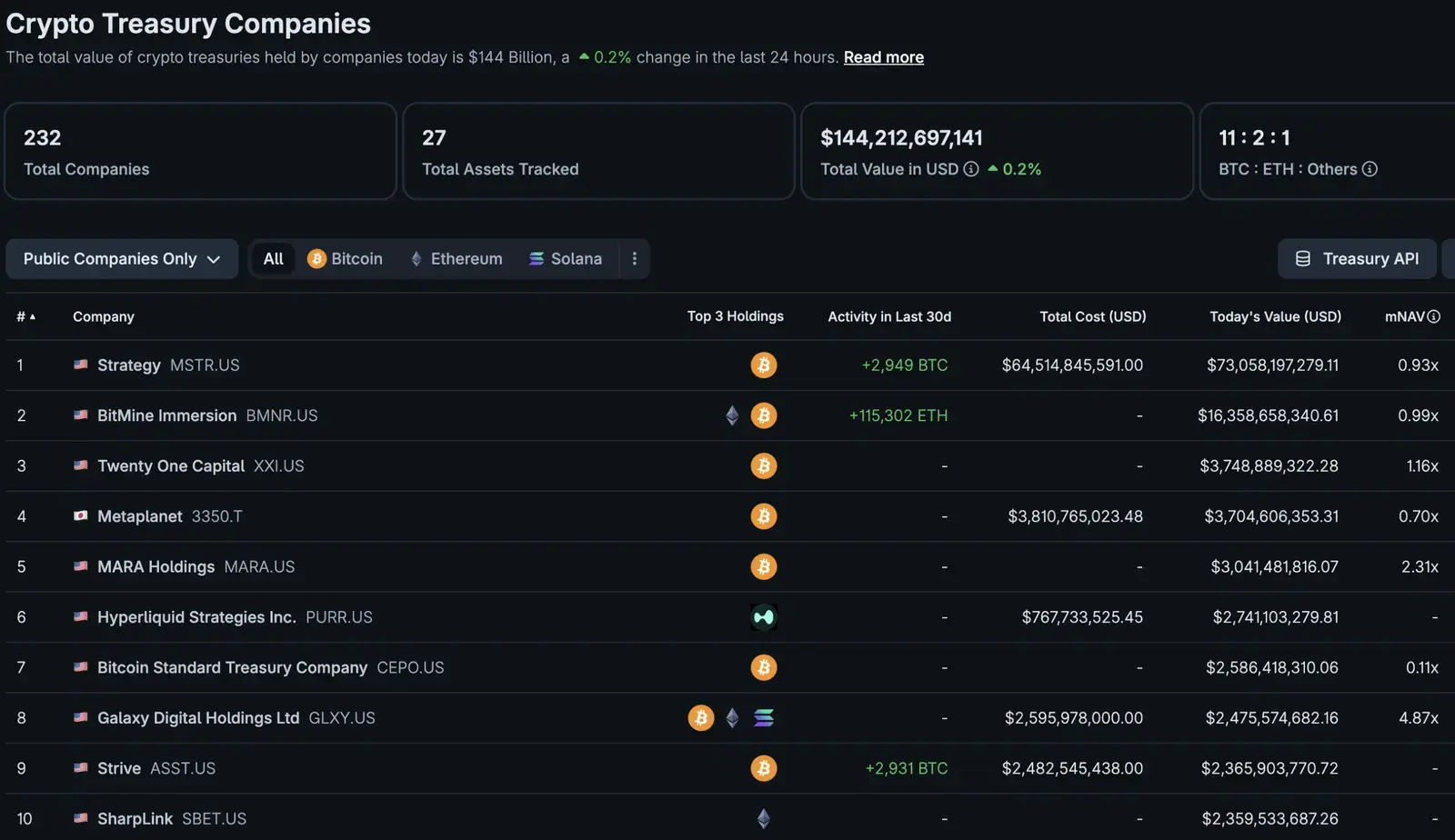
Sellers have successfully halted upward momentum above $87,000 three times since September 23. Following the latest rejection, Bitcoin fell about 0.5% to settle around $85,800. This price correction unfolded precisely as major corporate players entered the market. Strategy expanded its holdings by purchasing 334 Bitcoin units, while Strive added another 2,000 coins to its treasury.
Breaking news
 Bitcoin Security Could Be Threatened by 2046, AI Model Indicates
 XRP Ledger Patches Critical Bug That Could Have Minted 18 Trillion Tokens
 Aptos Launches AI Tools to Simplify Move Programming
 Regulatory Reach: CFTC Says It Can Oversight Nearly All Commodities
This dynamic creates a complex market picture. Continuous corporate accumulation has not yet transformed steady demand into a confirmed breakout past current resistance. Financial details regarding recent operations offer further context. Strive acquired its 2,000 coins for a total value of $169 million, calculating an average cost of $84,422 per unit. This transaction increased its total holdings to 29,462.615 coins. A financial report published today highlights that 15% of the raised capital came from issuing Series A perpetual cumulative variable rate preferred stock (SATA). This process generated $56.7 million. Official 8-K documentation also outlines key performance indicators valid through the third quarter of 2026.
These acquisitions prove that both organizations continue directing financial resources toward crypto assets. However, these moves do not guarantee enough buyers will absorb existing supply at the $87,000 level. The immediate challenge remains technical. The fundamental question is whether the current corporate acquisition pace can be sustained without introducing funding risks or structural shareholder issues.
Market analysis shows BTC holding near the $86,000 mark. Until the $87,000 barrier breaks, any advance attempt remains capped by this ceiling. Resistance was tested on October 5, and by the morning of October 6, trading hovered around $86,000. Because this level has limited upward reversals multiple times since September 23, it stands firmly as a major resistance zone. Notably, higher local lows have formed, signaling buyer intervention. Still, this has not generated enough momentum to force a breakout.
Corporate BTC USD Buying is Real, but Here is Why Funding Matters
Alex Kuptsikevich, an analyst at FxPro, observed that Bitcoin is approaching the apex of a triangle pattern. This configuration often triggers increased volatility, though it does not indicate the exact direction of future movement. On a broader scale, the total crypto market cap dipped to approximately $2.93 trillion, sitting just below the identified resistance level of $2.95 trillion.
While the Nasdaq 100 hit a new record and the S&P 500 neared historical highs, Bitcoin faced pressure from a slight increase in interest rates. Other major altcoins posted modest performances. Ethereum, XRP, Solana, and Dogecoin dropped between 1% and 2%, whereas Cardano (ADA) jumped 11%. The market reflects a mix of short-term positive signals and persistent resistance, requiring traders to wait for clear price confirmation before adjusting their positions.
On the corporate front, Strategy and Strive bought a combined 2,334 BTC units. This signals active institutional demand, though it does not mean market selling pressure has stopped. Strategy’s purchase of 334 coins brought its total holdings to 848,000 units. The company funded this acquisition by selling about $28.7 million in Class A common stock. This funding model highlights how expanding a Bitcoin treasury can dilute existing shareholders.
For Strive, buying 2,000 coins raised its holdings from 27,462 to 29,462 units, valued at roughly $169 million. Financing relied heavily on Series A perpetual cumulative variable rate preferred stock (SATA). This structure prioritizes investor dividends, adding extra complexity to the company’s Bitcoin strategy. Furthermore, Strive holds a $500 million facility for potential SATA repurchases, a measure that could influence future financing costs.
Different funding approaches directly affect both share dilution and liquidity reserves. Consequently, holding shares in a Bitcoin treasury company carries distinct risks compared to owning the underlying asset directly. Stock prices can easily fluctuate based on corporate financing decisions and internal capital structures.