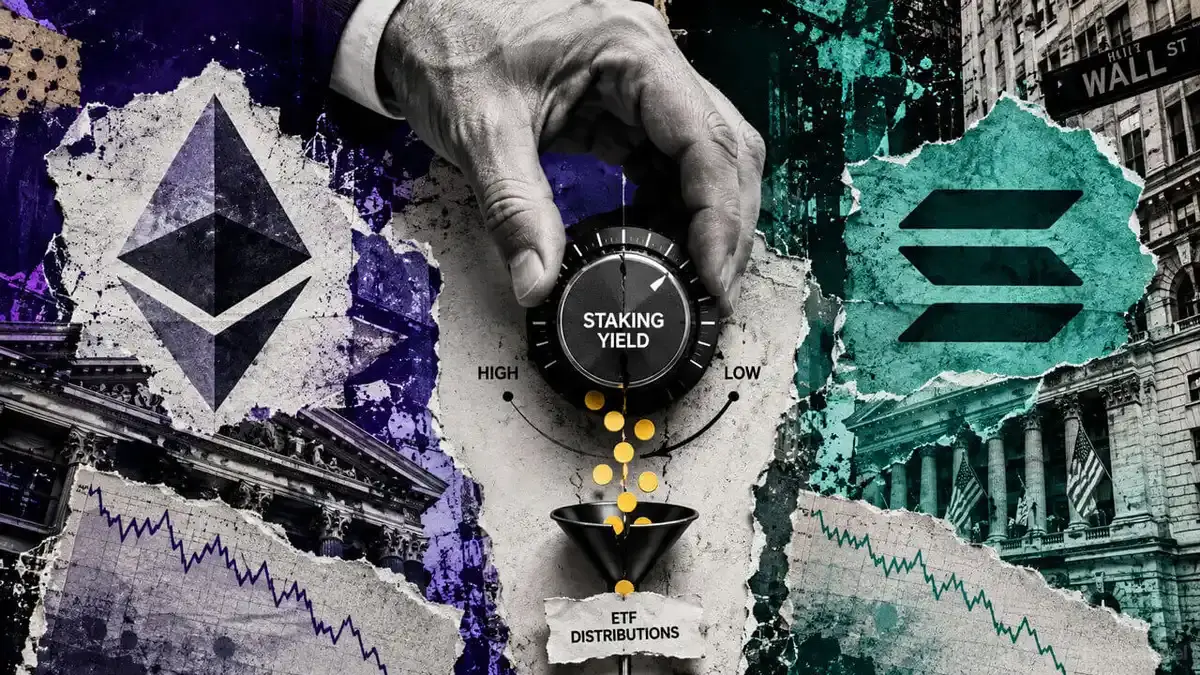
The Tension Between Yield and Scarcity
Major financial institutions are currently navigating a complex shift in digital asset management. Following recent SEC filings, Grayscale is preparing to integrate Ethereum and Solana staking into exchange-traded funds. This move aims to turn crypto staking rewards into consistent dividend payouts, fundamentally altering how institutional investors interact with blockchain networks.
Breaking news
 Cardano Price Analysis: Whale Activity Surges as ADA Tests Key Resistance
 Bitcoin Price Walks a Tightrope as Bears Circle the $82K Zone
 Bitcoin’s Rally Nears $85,000, Potential Sell‑off Zone for Early Buyers
 Near Protocol Trading Volume Doubles Following 11% Price Increase
The strategy attempts to mirror traditional stock dividends by distributing staking rewards directly to shareholders. However, this model faces technical friction as blockchain protocols evolve. Ethereum and Solana are increasingly prioritizing network efficiency over high inflation. By reducing token issuance, these networks aim to combat dilution, which directly impacts the total yield available for distribution to investors.
The core of this financial experiment lies in the trade-off between immediate income and long-term asset value. Traditional yield products rely on high staking rewards to attract capital. Conversely, modern blockchain governance often favors burning tokens or limiting new supply to curb inflation. This creates a difficult environment for fund managers who promise steady dividend streams.
Will Lower Inflation Undermine Dividend Models?
Investors are now forced to weigh the benefits of regular payouts against the potential for network-wide supply constraints. If a protocol successfully reduces its inflation rate, the total staking reward pool shrinks. While this may increase the underlying value of each token, it complicates the promise of a reliable, high-percentage dividend for retail and institutional fund holders.
The success of these ETFs depends on whether market participants prioritize consistent cash flow or the deflationary health of the underlying asset. If networks continue to move toward lower issuance, fund providers may need to adjust their payout structures. This could force a pivot away from pure yield-based marketing toward a focus on long-term capital appreciation.
Frequently Asked Questions
As Wall Street deepens its involvement in crypto, the conflict between protocol-level monetary policy and investor expectations will intensify. The ability of these funds to adapt to changing network dynamics will determine their viability. Ultimately, the market must decide if it values a steady stream of tokens more than the scarcity of the asset itself.
What is the main challenge for staking ETFs? The primary challenge is the conflict between network deflationary policies and the need for high staking rewards. As blockchains reduce token issuance, the yield available for dividends naturally decreases.
How do these products function for investors? These ETFs collect staking rewards generated by the underlying assets and distribute them as dividends. This mimics the structure of traditional equity dividends for investors who do not want to manage staking personally.