Geopolitical Tensions Cloud Crypto Outlook
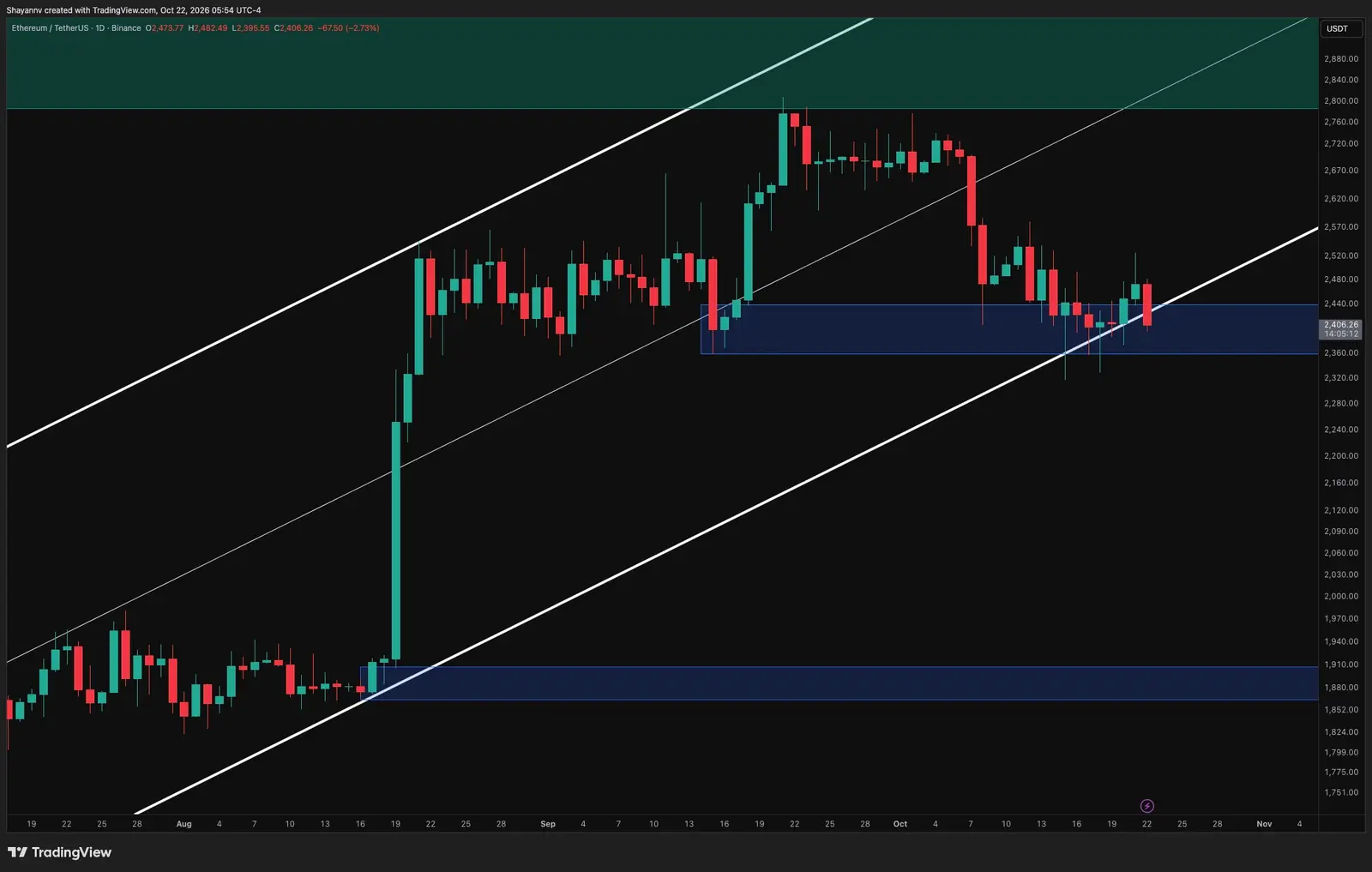
Ethereum has pulled back sharply from its recent high, settling near the $2,400 mark. This reversal undermines the earlier bullish momentum that had pushed prices above the critical $2,500 resistance level. Market analysts now view a bearish breakdown as the primary scenario for the asset. The pullback coincides with rising geopolitical tensions between Iran and the United States, creating a risk-off environment. While these external factors may influence sentiment, their direct impact on Ethereum remains speculative rather than confirmed.
Breaking news
 Dogecoin Co-Founder Identifies Weak Demand as Catalyst for Crypto Market Slump
 Dogecoin Bounces Back After Brutal 65% Year-Long Slide
 Bitcoin Miners Face Hardware Shortage as AI Boom Strains Chip Supply
 Claude AI Forecasts Chainlink Plunge in 2027
The technical picture on the daily chart suggests significant pressure on buyers. The failure to sustain gains above $2,500 indicates that sellers are reasserting control over the market structure. Traders who entered positions during the recent rally now face unrealized losses as the price tests lower support zones. The sharpness of this reversal highlights the fragility of the previous upward move. Investors are closely watching whether the asset can hold the $2,400 floor or if it will slide further toward historical lows.
Will Support Hold Before a Deeper Drop?
Escalating conflicts between Iran and the US introduce an additional layer of uncertainty for digital assets. Historically, geopolitical instability often triggers a flight from riskier investments toward safe havens like gold or the US dollar. This risk-off headwind could suppress demand across the broader cryptocurrency sector, including Ethereum. However, experts caution against assuming a direct causal link between the conflict and ETH’s specific price action. The decline appears driven primarily by internal technical factors, such as the rejection at key resistance levels. External news events merely amplify existing market vulnerabilities rather than initiating the drop.
The immediate focus shifts to identifying viable support levels that might halt the downward trajectory. If the price loses the current $2,400 zone, the next major psychological barrier lies significantly lower. Technical indicators suggest that momentum is currently favoring bears, making a quick rebound unlikely without fresh capital inflow. Market participants are analyzing volume patterns to determine if selling pressure is exhausting itself or continuing to build. A decisive break below key moving averages would confirm the bearish thesis, potentially opening the door for a test of the $2,000 level.
Why did Ethereum fail to hold the $2,500 level? The price encountered strong selling pressure at this resistance zone, causing a sharp reversal. Buyers lacked sufficient volume to push through the ceiling, leading to a return to lower prices.
Frequently Asked Questions
How do Iran-US tensions affect Ethereum specifically? Geopolitical risks generally create a risk-off sentiment that discourages investment in volatile assets like crypto. While the conflict adds background noise, the primary driver for ETH’s drop remains technical rejection rather than direct news impact.
Is a drop to $2,000 likely next? A move to $2,000 becomes a realistic possibility if the current support levels fail. Analysts consider this a bearish scenario, but it requires a confirmed breakdown of the immediate support structures first.