Why This Matters for Retail and Institutional Traders
The Commodity Futures Trading Commission has approved trading of perpetual futures contracts on single US equities. The decision allows exchanges registered with the agency to list these products. Within hours of the announcement, a coalition led by Cboe and Citadel Securities filed a lawsuit. The plaintiffs argue the CFTC exceeded its statutory authority.
Breaking news
 Claude AI Forecasts Chainlink Plunge in 2027
 XRP Crashes to $0.87 as ETF Assets Fall Below $1 Billion
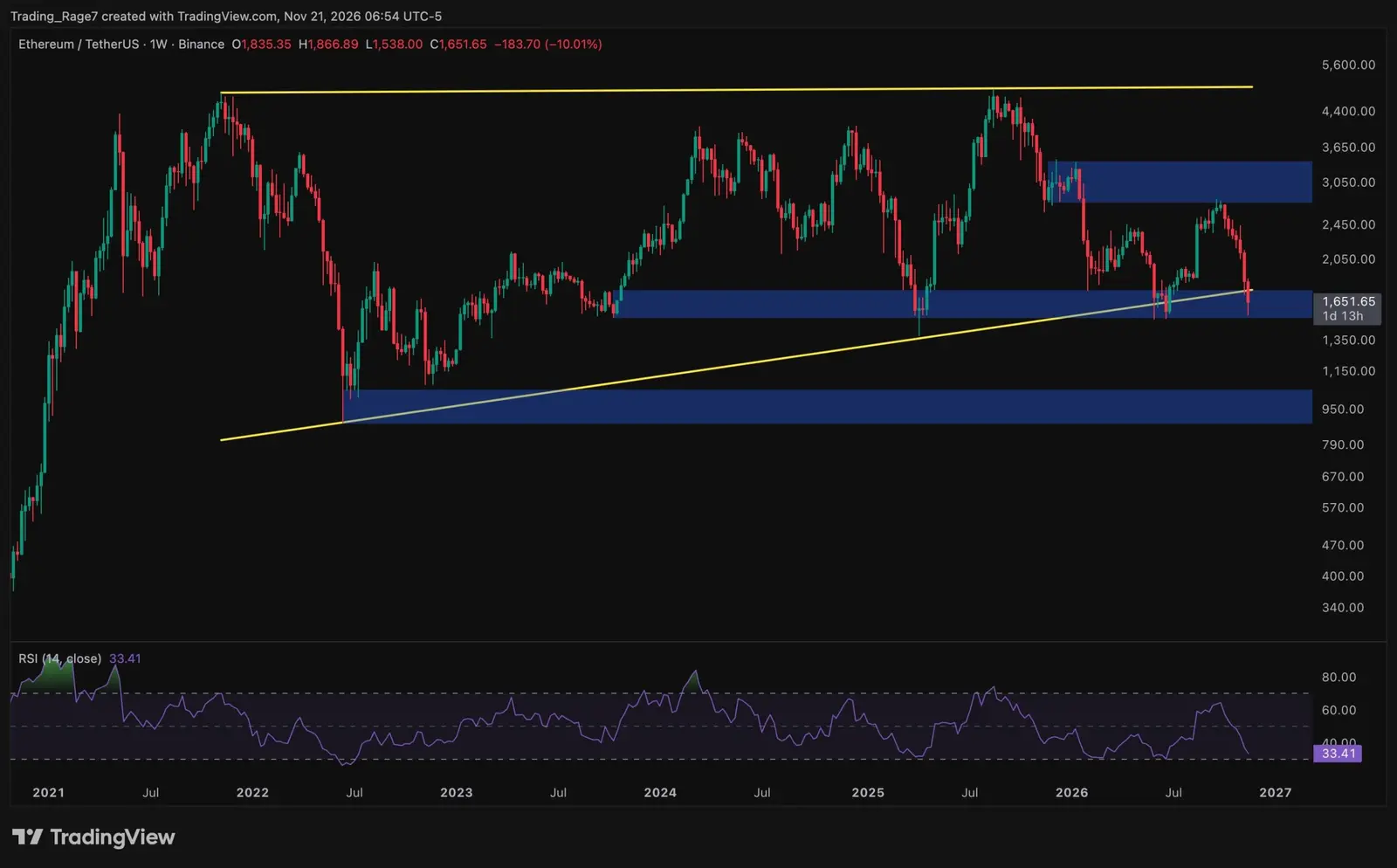 Ethereum price analysis: Did ETH hit its macro bottom after a 30% monthly drop?
 Bitcoin Reclaims $60,000 After Sharp Summer Selloff
The approval rests on a 2000 law that established a joint regulatory framework. This framework covers products that sit between traditional commodities and securities. The CFTC used this authority to bring equity perps under its purview. Critics say the law did not grant the agency power over single-stock derivatives.
Perpetual futures let investors maintain positions indefinitely without a fixed expiration date. This feature has driven massive growth in crypto and now extends to traditional equities. Traders gain leverage and flexibility. Institutions see new hedging tools. Retail investors get access to products previously limited to offshore venues.
Can the CFTC Defend Its Authority in Court?
The lawsuit challenges the legal basis of the CFTC's action. The plaintiffs contend the 2000 law covers hybrid products but not pure equity derivatives. If the court agrees, the approval could be overturned. This creates uncertainty for exchanges that have already listed the contracts.
The CFTC must prove its interpretation of the 2000 law is valid. Legal experts note that courts often defer to agency interpretations. However, the specific language of the statute may limit the agency's reach. The outcome will shape how regulators handle future product approvals.
Exchanges face a difficult position. They have already onboarded traders and built trading infrastructure. A court ruling against the CFTC could force them to delist contracts or face penalties. The legal battle will likely take months to resolve.
Frequently Asked Questions
What are perpetual futures? Perpetual futures are derivative contracts with no expiration date. Traders can hold positions indefinitely, paying periodic funding fees.
Who is suing the CFTC? A group backed by Cboe and Citadel Securities filed the lawsuit. They claim the agency lacked legal authority for the approval.
What happens if the lawsuit succeeds? The CFTC's approval would be invalidated. Exchanges may need to pause trading on equity perps until a new rule is issued.