How Automated Market Makers Fit Into Equity Markets
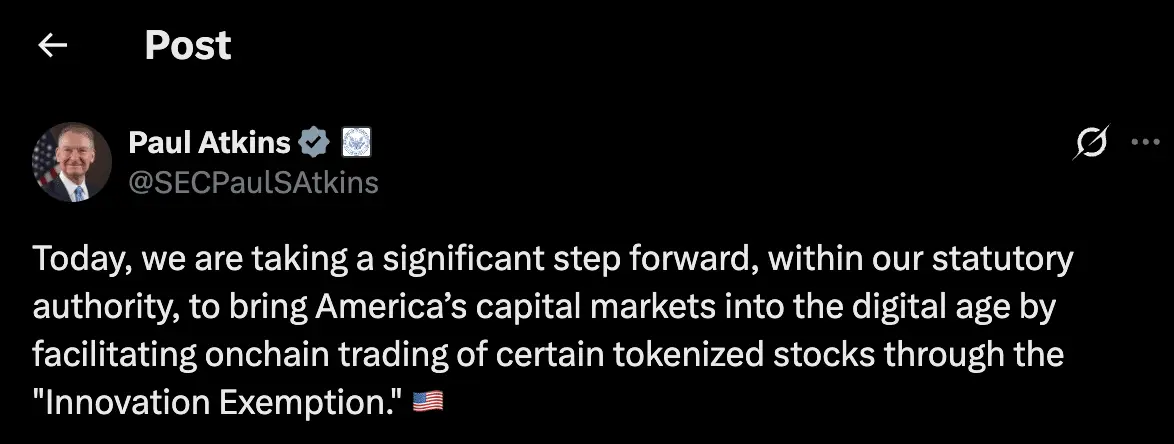
The U. S. Securities and Exchange Commission has issued a temporary order permitting specific digital venues to trade tokenized versions of major American stocks. This regulatory move allows permissioned platforms to utilize automated market makers and liquidity pools for these assets. The decision marks a significant shift in how traditional equity markets interact with blockchain technology.
Breaking news
 Crypto News Site Faces Sale After Google Penalty
 Justin Drake urges crypto ‘bunker mode,’ as AI could break wallet security within months
 XRP Whale Withdrawals from Binance Hit Seven-Month Peak
 What is a euro-pegged stablecoin?
The agency granted this conditional relief to allow trading of tokenized U. S. National Market System stocks. These are shares from companies listed on major exchanges like the NYSE or Nasdaq. The order specifically targets permissioned venues, which restrict access to verified participants rather than open public users. This approach aims to balance innovation with investor protection during the early stages of adoption.
Traditional stock trading relies on centralized exchanges where buyers and sellers match orders directly. In contrast, the new framework enables the use of automated market makers. These algorithms facilitate trades against liquidity pools rather than waiting for a specific counterparty. This mechanism can increase efficiency and potentially reduce friction in the trading process. The SEC’s statement, initially referenced in late January 2026, laid the groundwork for this structural change. By allowing liquidity pools, the regulator acknowledges that price discovery can occur continuously. This method supports faster settlement times compared to traditional T+1 cycles. The conditional nature of the relief means these venues must meet strict operational standards before full approval.
What Does Conditional Relief Mean for Investors?
Regulators emphasized that this is not a permanent rule but a temporary measure. It provides a testing ground for how tokenized securities behave in live markets. The focus remains on ensuring that the underlying assets are properly backed and that smart contracts execute correctly. This step addresses long-standing questions about whether decentralized finance tools can handle traditional financial products safely.
Investors should view this development as a pilot program rather than a final destination. The term conditional reliefimplies that the SEC will monitor performance closely. If issues arise regarding liquidity depth or price volatility, the agency can revoke the permission. Permissioned status ensures that only qualified entities participate, reducing the risk of retail investors entering complex on-chain environments prematurely. This structure protects the broader market while allowing institutional players to explore new infrastructure.
The move signals that the SEC is willing to adapt its oversight to accommodate digital asset innovations. It does not yet open the doors to fully decentralized, permissionless trading. Instead, it creates a controlled environment where tokenized equities can be tested. Market participants can now build products around these rails, knowing they have temporary regulatory cover. This clarity helps developers and exchanges plan their roadmaps with greater confidence.
Frequently Asked Questions
The immediate consequence is a clearer path for financial institutions to launch tokenized stock products. Outlook suggests a gradual expansion if the pilot succeeds. Future phases may include broader access and more asset classes. For now, the market awaits the first major venue to launch under this new framework. The success of these initial tests will determine the speed of integration between traditional finance and blockchain networks.
Does this allow anyone to buy tokenized stocks? No, the current relief applies only to permissioned venues. Access is restricted to verified participants, meaning the general public cannot yet trade freely on these specific on-chain platforms.
Is this a permanent change to SEC rules? It is a temporary, conditional measure. The SEC will review the performance of these venues and may adjust or revoke the permissions based on observed outcomes in the market.