
Why Separation Reduces Risk
A single security breach at Binance moved billions of dollars in client funds in minutes. The incident exposed a structural weakness in how crypto exchanges handle user money. Darren Jordan, founder of Komainu, argues that institutions should keep trading and custody functions separate, mirroring the long-standing practice in traditional financial markets.
Breaking news
 Claude AI Forecasts Chainlink Plunge in 2027
 XRP Crashes to $0.87 as ETF Assets Fall Below $1 Billion
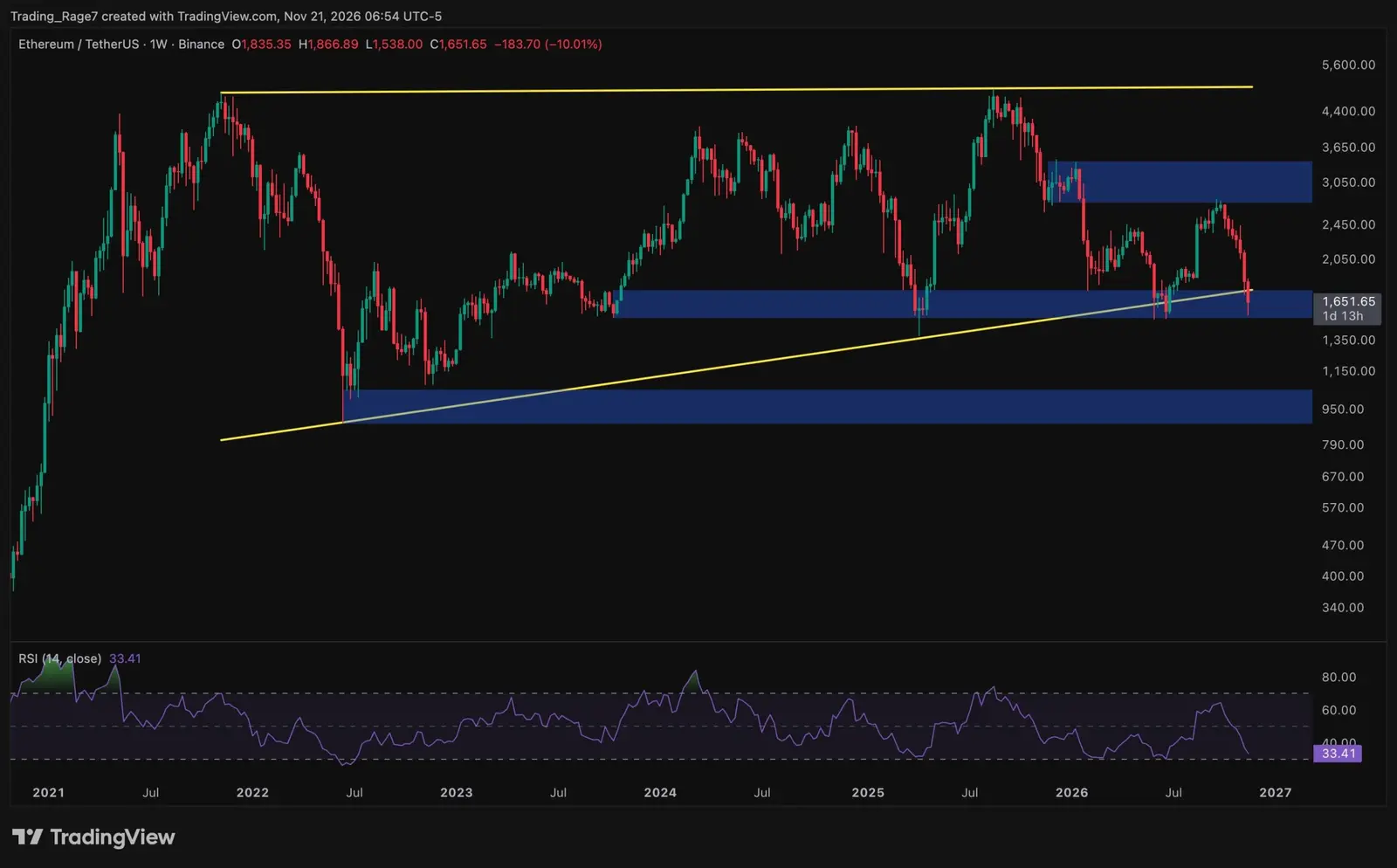 Ethereum price analysis: Did ETH hit its macro bottom after a 30% monthly drop?
 Bitcoin Reclaims $60,000 After Sharp Summer Selloff
The attack demonstrated that when an exchange acts as both the trading venue and the vault for client assets, a single point of failure can drain massive sums almost instantly. Jordan contends that this dual role creates unnecessary risk. Traditional markets have kept these functions distinct for decades, a model he believes crypto should adopt.
Jordan explains that when trading and custody are combined, a breach of the trading platform can directly access stored client funds. In traditional finance, custodians hold assets separately from trading desks. This separation limits the blast radius of any single failure. For crypto institutions, adopting this model would mean storing client coins in dedicated custody systems rather than on the exchange itself.
Should Exchanges Stop Holding Client Funds?
The breach at Binance forces a broader question: should exchanges stop acting as custodians? Jordan argues yes. He points out that institutions in traditional markets have kept these roles separate for decades. The crypto industry has largely ignored this principle, leading to concentrated risk. Moving custody off-exchange would protect client assets from trading platform vulnerabilities.
The incident underscores a critical gap in crypto risk management. If institutions continue to leave billions with the venue that trades their assets, future breaches could prove even more costly. Separating trading from custody is not new advice; it is a proven safeguard from traditional finance that crypto has yet to fully embrace.
Frequently Asked Questions
Why did the Binance breach move so much money so fast? The exchange held client funds on the same platform where trading occurred. A single breach gave attackers direct access to those stored assets, allowing rapid withdrawal.
What does Jordan recommend institutions do? He advises keeping trading and custody separate, following the traditional finance model. Client funds should sit with a dedicated custodian, not the trading venue.
Is this new advice for crypto? No. Traditional markets have separated these functions for decades. Jordan argues crypto should finally adopt the same structure to reduce systemic risk.