
Institutional Flight And Liquidation Pressure
Bitcoin dropped below the $62,000 mark for the first time since early July, marking a significant decline in its recent trading range. The digital asset slid to a low of $61,270 before stabilizing near $61,700. This sharp drop extends a difficult month for the cryptocurrency, which has lost over 10% of its value in November. Institutional investors have driven this downturn by withdrawing substantial capital from the market.
Breaking news
 Bitcoin Miners Face Hardware Shortage as AI Boom Strains Chip Supply
 Claude AI Forecasts Chainlink Plunge in 2027
 XRP Crashes to $0.87 as ETF Assets Fall Below $1 Billion
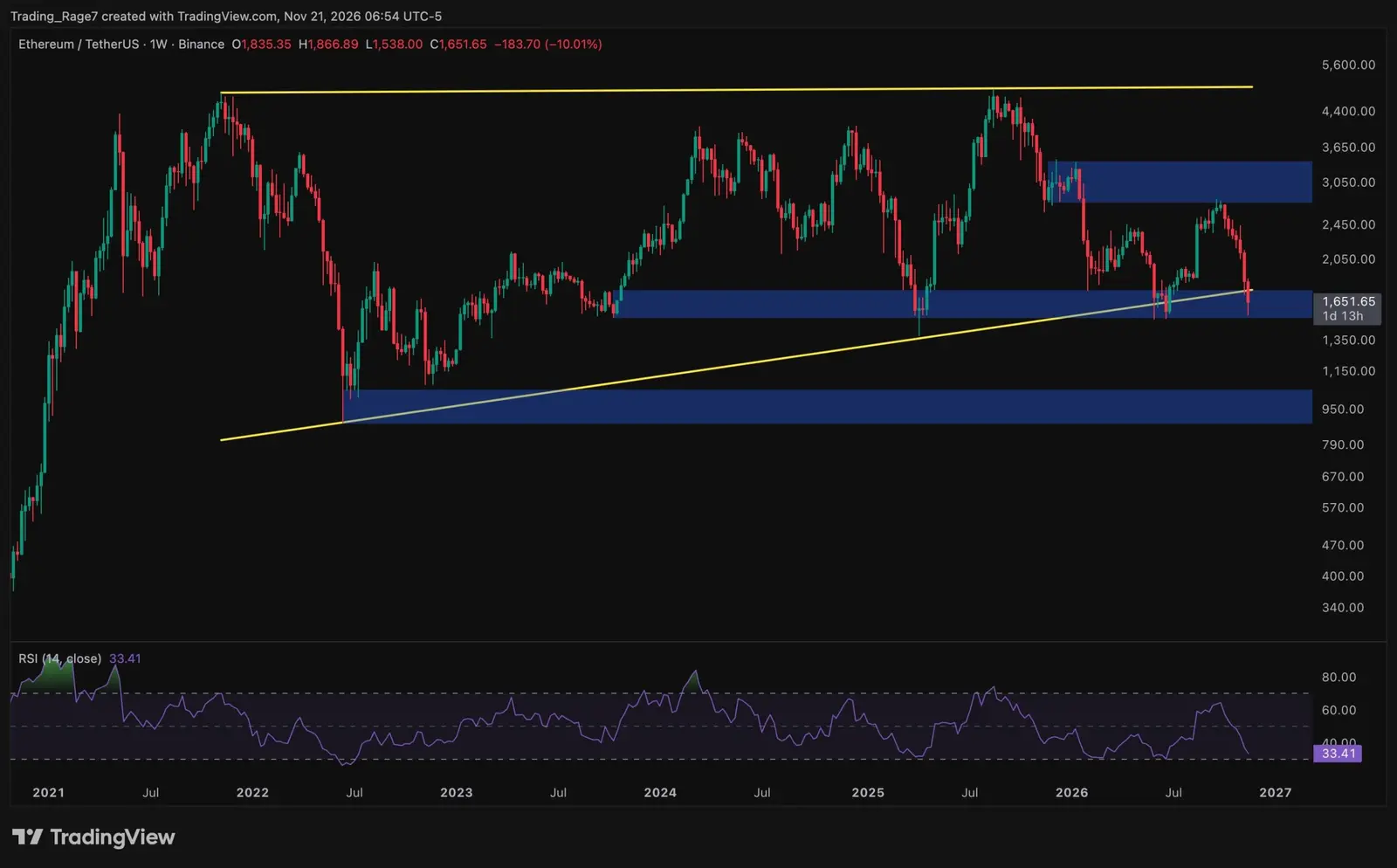 Ethereum price analysis: Did ETH hit its macro bottom after a 30% monthly drop?
The sell-off coincides with massive outflows from Bitcoin exchange-traded funds. These products saw net outflows totaling $582 million, signaling a retreat by large-scale holders. As prices fall, leveraged traders face increasing pressure. Liquidations mount as positions are forcibly closed, adding fuel to the downward momentum. The market is now testing critical support levels to determine if the selling phase has ended.
The primary driver behind the crash is the withdrawal of billions of dollars by institutional players. These entities, who previously fueled the rally, are now exiting their positions. This exodus creates immediate liquidity issues, forcing prices down rapidly. The $582 million in ETF outflows serves as a clear indicator of shifting sentiment. Traders interpret this data as a warning sign that the bullish trend may be reversing. Consequently, many retail investors are reacting with panic, contributing to the volume spike.
Can Bitcoin Defend The Critical Support Zone
Liquidations have become a dominant feature of the current market structure. As Bitcoin trades near key psychological barriers, long positions are being wiped out. This forced selling accelerates the price decline, creating a feedback loop. Market participants are closely watching the $60,000 level, which acts as a major technical support zone. If this floor breaks, further downside could trigger additional waves of liquidations.
Traders are now focused on whether Bitcoin can hold the $60,000 threshold. This level represents a significant psychological barrier for both bulls and bears. A successful defense would suggest that buyers are still active despite the volatility. However, a break below this line could open the door to lower price targets. Analysts note that the current volatility is higher than usual, making precise predictions difficult. The market remains in a state of uncertainty, waiting for a clear directional signal.
Frequently Asked Questions
Investors must decide how to navigate this choppy environment. Some choose to wait for confirmation of a bottom before re-entering positions. Others view the dip as an opportunity to accumulate at lower prices. The outcome depends heavily on how quickly institutional flows stabilize. If outflows continue, the bearish pressure will likely persist. Conversely, a reversal in ETF flows could spark a recovery.
Why did Bitcoin fall below $62,000? The drop resulted from heavy institutional outflows and a wave of liquidations. ETFs recorded $582 million in net outflows, driving the price down sharply.
What is the next key support level? Traders are monitoring the $60,000 mark as the critical floor. A break below this level could lead to further declines in the asset's value.