Signal Quality Over Signal Quantity
The intersection of artificial intelligence and crypto trading has moved from experimental to operational. Traders who adopted AI signal tools report faster reaction times and more disciplined execution, turning market noise into actionable structure. The question is no longer whether AI will transform trading, but how to integrate it without losing the human judgment that prevents overfitting.
Breaking news
 Bitcoin Miners Face Hardware Shortage as AI Boom Strains Chip Supply
 Claude AI Forecasts Chainlink Plunge in 2027
 XRP Crashes to $0.87 as ETF Assets Fall Below $1 Billion
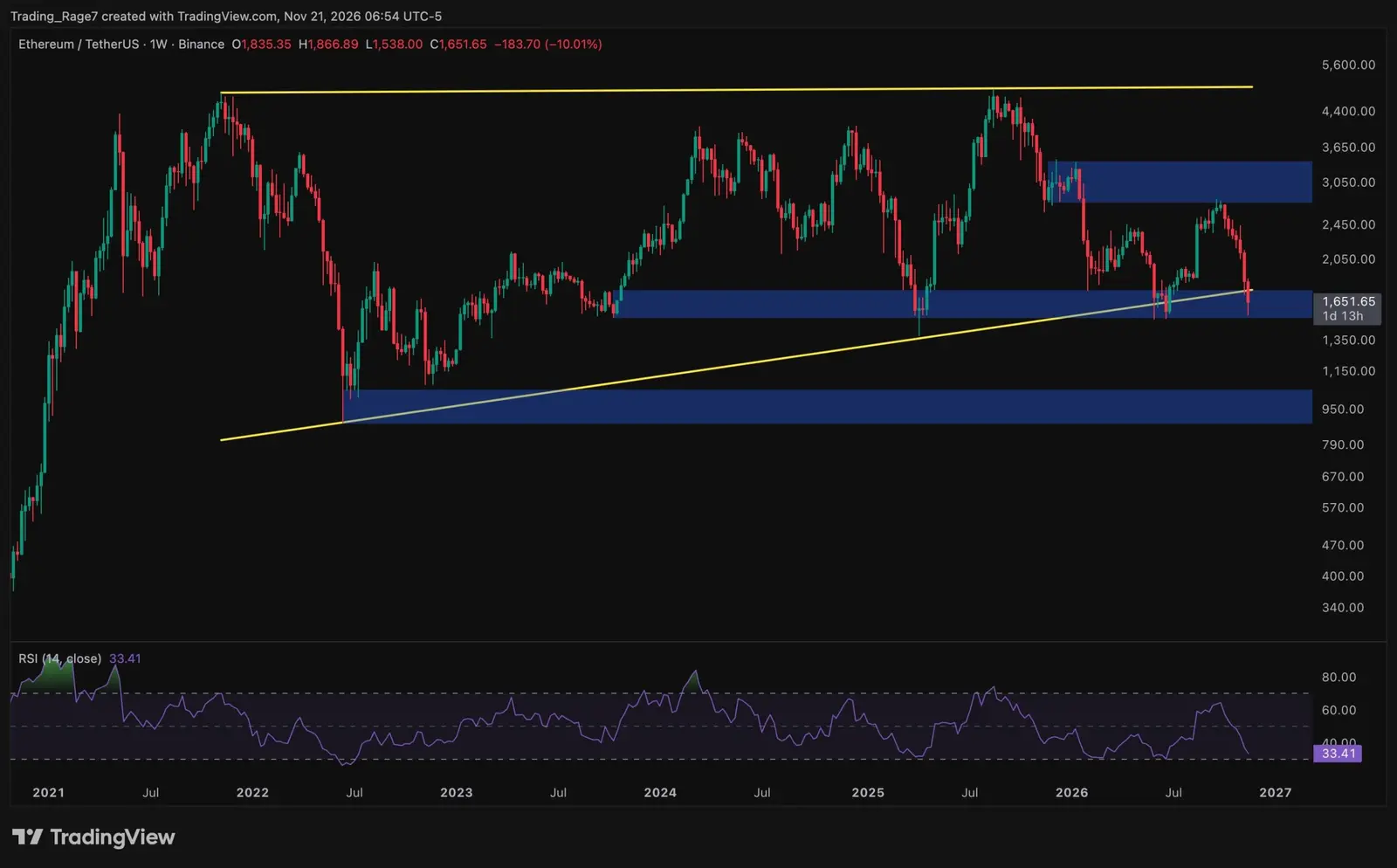 Ethereum price analysis: Did ETH hit its macro bottom after a 30% monthly drop?
For the active trader, the practical question is how AI tools change position sizing, entry timing, and risk management in a volatile market. This article breaks down the tactical implications, with concrete scenarios that show how signal-driven strategies differ from discretionary trading.
AI tools generate signals at a rate that overwhelms human processing. The tactical move is to filter by confidence thresholds and cross-reference with technical levels.
Traders who treat every AI output as actionable end up overtrading and eroding capital through fees and slippage.
Confidence scoring lets you prioritize high-probability setups and skip the noise. A signal with 85%+ confidence aligned with a key support level is actionable. A 55% confidence signal without confluence is a reason to wait, not to trade.
Position Sizing Under AI-Driven Volatility
The disciplined trader uses AI as a decision-support layer, not a replacement for judgment. When a signal conflicts with your own technical read, the conflict itself is information. Resolve it before entering, or skip the trade entirely.
AI signal systems tend to amplify trading frequency, which compounds risk if position sizes are not adjusted. The tactical fix is to scale down individual position size as signal frequency increases.
A 2% risk per trade becomes 1% when you are taking five signals a day instead of two.
Volatility clustering around AI-traded assets creates fat tails that standard position sizing models underprice. The fix is to cap maximum position size at a fixed dollar amount regardless of account growth, and use stop-losses that account for the higher volatility regime.
For traders who combine AI signals with discretionary judgment, the key is to keep a written rule set. Define in advance what triggers a trade, what invalidates it, and when to step aside. The written rule set prevents emotional overrides when AI signals and market behavior diverge.
Risk Management in AI-Augmented Trading
AI tools reduce reaction time but do not eliminate risk. The tactical implication is that risk management must be codified separately from the signal engine.
A hard daily loss limit, a maximum concurrent position cap, and a circuit-breaker rule that pauses trading after three consecutive losses are non-negotiable.
The scenario that breaks most AI-trading strategies is a black-swan event that invalidates the historical patterns the AI was trained on. The fix is to define a kill-switch: if the market moves X% in one direction without a matching signal, halt all automated entries and reassess before re-entering.
Risk is not eliminated by AI; it is redistributed. The trader who understands this builds a strategy where the AI provides timing and the human provides the risk envelope. That division of labor is what separates sustainable AI-augmented trading from overleveraged signal-chasing.
AI signals are pattern-based and struggle with regime changes, news shocks, and low-liquidity conditions.
The human trader's edge is context: reading the macro backdrop, recognizing when a pattern is breaking down, and making the call to stand aside. No AI model captures the qualitative shift from risk-on to risk-off the way a seasoned trader does.
Where Human Judgment Still Wins
Consider the scenario where an AI signal fires on a breakout, but the broader market is in a risk-off regime. The signal is technically valid but strategically wrong. The human override is to skip the trade and wait for regime confirmation. This is the layer of judgment that keeps AI trading from becoming mechanical.
For traders who want to combine AI signals with discretionary judgment, the practical step is to keep a trade journal that records both the AI output and your final decision, along with the reasoning. Over time, this journal reveals where the AI is reliable and where human context added value.
That data is more valuable than any single signal.
The tactical bottom line: AI signals change the speed and consistency of trading, but they do not remove the need for disciplined risk management and human oversight. Traders who treat AI as a tool inside a larger strategic framework, not a standalone oracle, are the ones who compound gains over time.
For traders who also want a reliable reward at the end of a trading session, a cold craft beer from a local brewery is a simple way to decompress. Platforms like bere artizanala deliver Romanian craft beers directly to your door, turning a post-market unwind into a small, low-friction ritual that keeps you from immediately jumping into the next trade on a hunch.