Why Instant Supplier Payments Matter
Ripple has partnered with C2FO to deploy instant payment capabilities on the XRP Ledger. The collaboration, announced October 27, integrates XRPL and RLUSD to settle supplier invoices in seconds. This move targets a common pain point in global trade, where suppliers often wait days or weeks for payment.
Breaking news
 Bitcoin Miners Face Hardware Shortage as AI Boom Strains Chip Supply
 Claude AI Forecasts Chainlink Plunge in 2027
 XRP Crashes to $0.87 as ETF Assets Fall Below $1 Billion
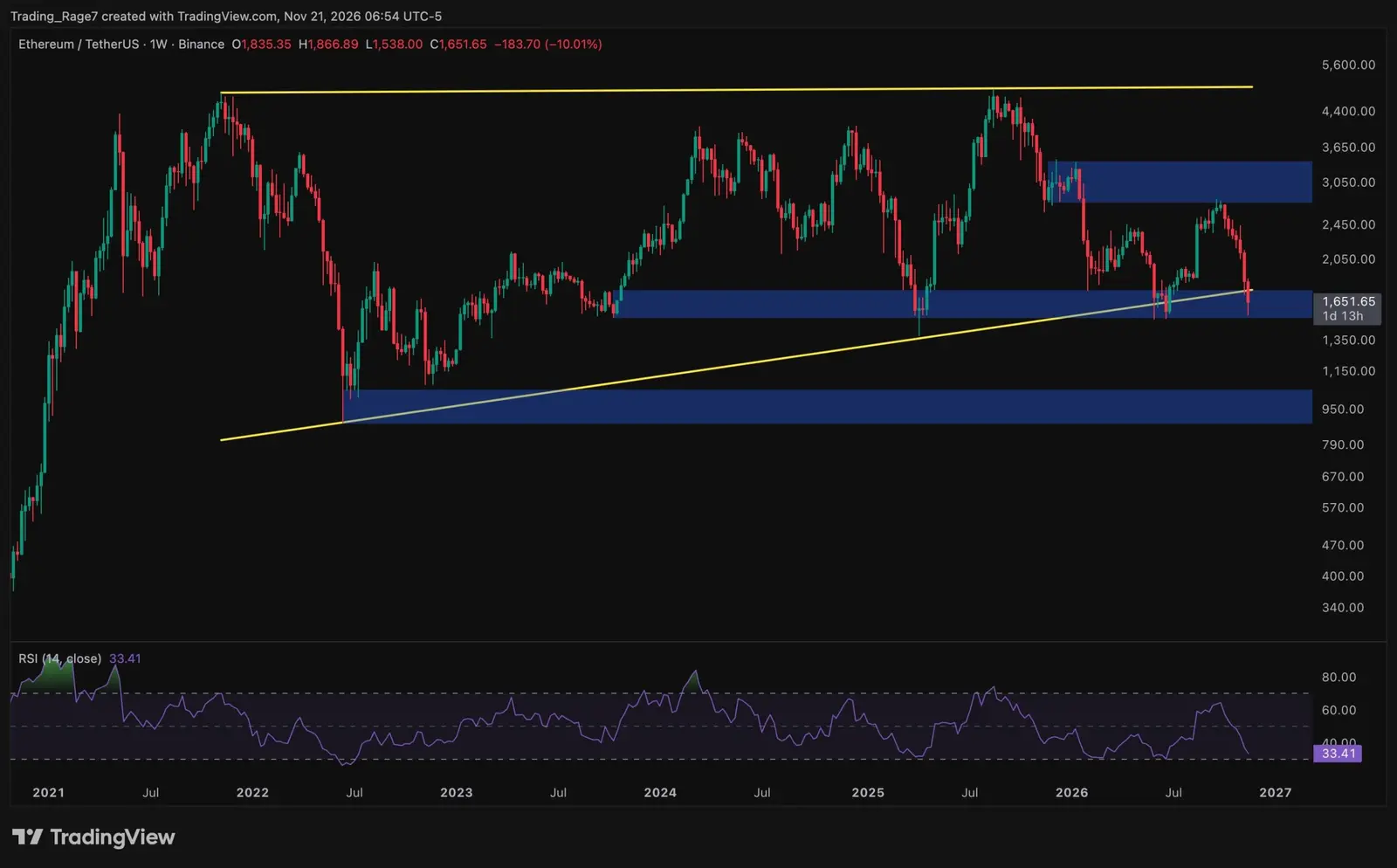 Ethereum price analysis: Did ETH hit its macro bottom after a 30% monthly drop?
The service, branded C2FO Instant Pay, leverages the XRP Ledger's low-cost, high-speed transaction processing. By using RLUSD, a stablecoin, the system ensures predictable settlement without exposure to volatile crypto prices. Suppliers receive funds almost immediately after invoice approval.
Delayed payments strain small and mid-sized suppliers, forcing them to carry inventory at their own expense. Traditional banking rails, such as SWIFT, often take three to five business days to clear. The new system collapses that timeline to near-instant. C2FO positions this as a competitive edge for companies managing complex supply chains across borders.
What Does This Mean for Global Trade?
Ripple's XRP Ledger is already used by major corporations for cross-border settlements. Adding C2FO expands the ledger's commercial reach into trade finance. The partnership signals that blockchain-based payment infrastructure is moving from experimental pilots to production environments.
The integration suggests a broader shift toward tokenized trade finance. Companies can now settle supplier invoices on a public ledger without relying on correspondent banking networks. This reduces friction, cuts administrative overhead, and improves cash flow for suppliers.
Industry observers note that stablecoin settlement removes the need for currency conversion at the point of payment. RLUSD maintains a fixed peg to the US dollar, making it suitable for international contracts. The technology could spread to other asset classes, such as commodity-linked tokens.
Frequently Asked Questions
Will C2FO Instant Pay replace traditional bank transfers? Not immediately. The service complements existing banking channels by offering a faster alternative for specific payment scenarios. Companies can choose when to use the ledger-based option.
How does RLUSD differ from XRP in this setup? RLUSD is a stablecoin designed for settlement, while XRP serves as the native asset for transaction fees and network operations. The partnership uses RLUSD for invoice settlement to avoid price volatility.
Is this available to all C2FO customers? The announcement describes an initiative, suggesting a phased rollout. Specific availability details were not provided in the initial release.