Miner Reserves Signal Tightening Supply
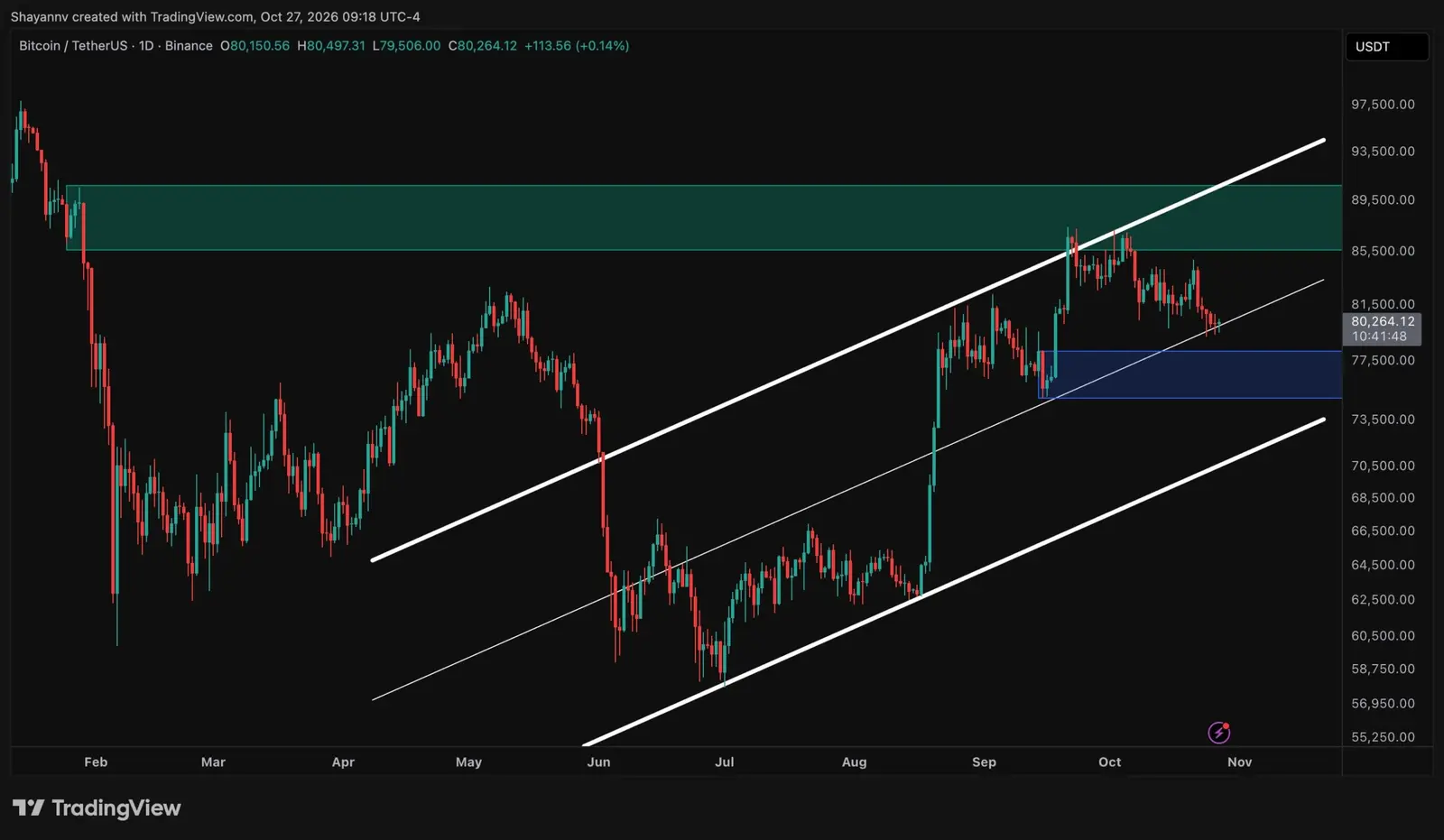
Bitcoin has settled above the $80,000 mark following a failed push toward $87,000. The price was rejected at that level, forcing a pullback that now tests the mid-channel support line. Traders are watching closely to see if the recovery structure survives or if a deeper correction begins.
Breaking news
 Bitcoin Miners Face Hardware Shortage as AI Boom Strains Chip Supply
 Claude AI Forecasts Chainlink Plunge in 2027
 XRP Crashes to $0.87 as ETF Assets Fall Below $1 Billion
 Ethereum price analysis: Did ETH hit its macro bottom after a 30% monthly drop?
The $87,000 zone has acted as a persistent resistance barrier. Each attempt to break through has met selling pressure. This pattern suggests institutional or algorithmic sellers are defending that level. The current price action leaves the market in a vulnerable position.
Can the Recovery Structure Survive This Pullback?
A declining miner reserve trend points to reduced selling pressure from mining operations. Fewer coins entering the market from miners could reduce downward pressure on price. This dynamic may help stabilize Bitcoin near current levels. The data indicates miners are holding rather than dumping, which supports the idea that supply is tightening at a time when demand remains steady.
The key question now is whether the broader recovery structure can hold under the current pressure. If $80,000 breaks, the next support zone would likely be tested. Traders are positioning for either a bounce or a deeper slide. The answer depends on how quickly buying steps in at lower levels.
Why is $87,000 acting as resistance? That level has repeatedly blocked upward moves, likely due to accumulated sell orders or profit-taking by large holders.
Frequently Asked Questions
What happens if $80,000 support breaks? A break below $80,000 would signal a deeper correction, potentially targeting the next major support zone lower in the channel.
What does declining miner reserve mean for price? Fewer coins from miners means less immediate selling pressure, which can help stabilize or support the price near current levels.